
The End of Paper? Germany's 'End-to-End' Digital Bureaucracy Promise for 2026

At 7:45 a.m. on a Tuesday in Berlin’s Mitte district, the ritual used to be predictable: a queue of shivering professionals clutching plastic "Leitz" folders, waiting for a Bürgeramt (Citizens' Office) to open its heavy wooden doors. For decades, the German bureaucracy was synonymous with the physical—wet-ink signatures, stamped carbon copies, and the ubiquitous fax machine. But as we enter the first quarter of 2026, the silence in these hallways is not a sign of stagnation, but of a radical, if painful, structural pivot.
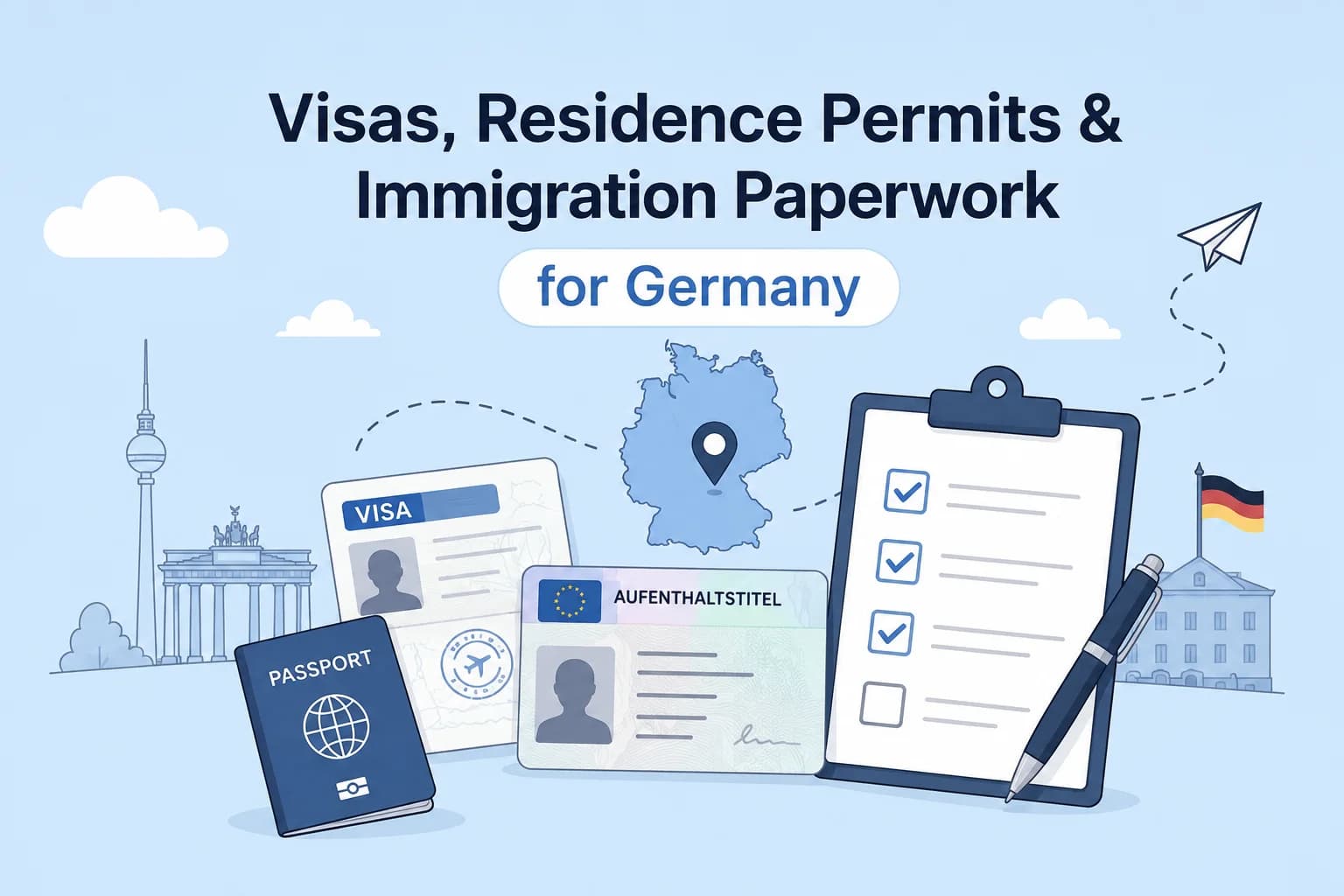
The "End-to-End" digital promise, codified in the 2024 amendments to the Online Access Act (OZG 2.0), reached its critical implementation deadline in late 2025. For the approximately 1.5 million high-skilled expats currently navigating the Eurozone’s largest economy, the transition from a "paper-first" to a "digital-only" administrative state is no longer a policy white paper—it is the daily reality of their residency.
Yet, as the physical folders disappear, they are being replaced by a sophisticated, often rigid, digital infrastructure. The "Germany Speed" (Deutschland-Tempo) promised by the federal government has met the friction of a decentralized federal system. For the C-suite executive or the specialized engineer, moving to Germany in 2026 requires a different kind of preparation: one that prioritizes digital literacy and an understanding of the new, algorithmic gatekeepers of German life.
The Hard Numbers: The Real Cost of the Digital Pivot
While the federal government projected that digitalization would save the economy approximately €1 billion annually in administrative overhead, the immediate impact on the individual professional is more nuanced. Inflation in the Eurozone is forecasted by the ECB to stabilize near 2.1% through 2026, but the specific costs associated with expat life in German hubs—housing, private health insurance, and "convenience" services—continue to outpace the general index.
The housing market remains the primary friction point. Despite the government's 2025 initiative to streamline building permits via digital "BIM" (Building Information Modeling) standards, the supply lag persists. In Munich and Berlin, the demand for "furnished business apartments"—the gateway for most incoming professionals—has driven prices to record highs.
Table 1: Comparative Monthly Cost of Living (Berlin/Munich Average)
Estimates based on Federal Statistical Office (Destatis) 2024 data and 2025/2026 IMF projections.
| Expense Category | 2024 Actual (Avg) | 2026 Projected (Avg) | % Change |
|---|---|---|---|
| Rent (Warm, 80sqm Apartment) | €1,850 | €2,150 | +16.2% |
| Health Insurance (Private/High-Tier) | €620 | €695 | +12.1% |
| Utilities (Electricity/Heating) | €280 | €265 | -5.3% |
| Grocery Basket (Premium) | €550 | €595 | +8.2% |
| Digital Services/Mobile/Fiber | €85 | €75 | -11.7% |
| Total Monthly Baseline | €3,385 | €3,780 | +11.6% |
Healthcare and the Electronic Patient Record (ePA)
2025 was the "Year of the Opt-Out." Since January 2025, every resident with statutory health insurance (GKV) was automatically issued an Electronic Patient Record (ePA) unless they explicitly objected. For the expat community, this has streamlined the "onboarding" process with local GPs (Hausärzte).
However, the cost of healthcare is rising. The Zusatzbeitrag (additional contribution rate) for statutory insurance is forecasted to hit an average of 2.2% in 2026, up from 1.7% in 2024, to cover the structural deficits in the nursing care fund.
Table 2: Administrative Processing Times (Digital vs. Legacy)
Based on Federal Office for Migration and Refugees (BAMF) 2025 roadmap targets.
| Process | 2024 Legacy (Weeks) | 2026 Digital (Weeks) | Status |
|---|---|---|---|
| Blue Card (EU) Issuance | 8–12 weeks | 2–4 weeks | Fully Digitalized |
| Residence Permit Renewal | 10–16 weeks | 3–5 weeks | Pilot Phase Complete |
| Tax ID Generation | 2–4 weeks | Instant (Digital) | Fully Automated |
| Business Registration (Gewerbe) | 3–6 weeks | < 48 Hours | State-Dependent |
The Regulatory Landscape: BundID and the Death of the Fax
The backbone of Germany's 2026 digital state is the BundID. Under the OZG 2.0 framework, this central user account is now the mandatory gateway for all federal, state, and municipal services. For the foreign professional, the "Online-Ausweis" (eID function) of their residence permit is no longer an optional gimmick—it is the only way to access the tax office (Finanzamt) or renew a driver’s license.
The New Visa Protocols
The Skilled Immigration Act (FEG) reached its full maturity in mid-2025. The "Opportunity Card" (Chancenkarte), based on a points system, is now managed through a unified federal portal.
- The 2026 Shift: Paper applications for the EU Blue Card have been officially deprecated in 14 out of 16 federal states.
- Verification: The Anerkennung (recognition) of foreign degrees is now processed via an AI-assisted equivalence database, shortening the wait from six months to approximately 30 days for standardized roles in IT and Engineering.
Tax and Transparency
The Finanzamt has integrated the "Once-Only" principle. By 2026, if you have provided your bank details or address to one government agency, the tax office is legally required to retrieve that data internally rather than asking you to provide it again. Furthermore, the 2024 Growth Opportunities Act has fully phased in mandatory e-invoicing for all B2B transactions as of January 1, 2025. This means expats running their own consultancies must use software that complies with the EN16931 standard; traditional PDFs sent via email are no longer legally sufficient for VAT deductions.
Local "On the Ground" Insight: The Cultural Friction of Data
To understand Germany in 2026, one must understand the specific German definition of Datenschutz (data protection). While the technology for a seamless digital life exists, the social contract is still catching up.
The transition to a "paperless" bureaucracy has triggered a unique psychological response in the German workforce. There is a lingering skepticism toward centralized data storage. Even as the Bürgeramt goes digital, you will find that your German colleagues still print out their digital confirmations "just in case."
In the workplace, the "Right to Disconnect" has moved from a corporate perk to a strictly enforced labor norm. As digitalization has made professionals more accessible, the 2025 Labor Reform Act clarified that "digital availability" outside of contracted hours constitutes overtime. For the expat manager, this means that even if the bureaucracy is now 24/7, the human element is more guarded than ever.
The "Analog Pockets": Despite the federal push, Germany's federalism (Föderalismus) remains its greatest hurdle. While Hamburg and Bavaria have implemented near-perfect end-to-end digital residency renewals, smaller municipalities in Brandenburg or Saxony-Anhalt may still struggle with "media breaks"—where a digital application is printed out by a clerk to be processed manually. The 2026 expat must research the "Digital Maturity" of their specific city-state before relocating.
Strategic Outlook: Navigating the Next 24 Months
The Germany of 2026 is an economy in the midst of a massive structural upgrade. The "End of Paper" is a reality for the federal government, but the implementation remains uneven. For the professional navigating this landscape, the strategy should be one of "Digital-First Compliance."
- Activate the eID Immediately: Upon receiving a residence permit, the eID function must be activated. Without it, the "End-to-End" digital promise is inaccessible, and the user is relegated to the few remaining—and severely overstretched—physical service points.
- Audit the Health Insurance Pivot: Ensure your provider (whether GKV or PKV) is fully integrated with the Telematikinfrastruktur. With the mandatory electronic prescription (E-Rezept) now the standard, an outdated insurance card or lack of a provider app will lead to significant delays at pharmacies.
- Housing as a Pre-Contract Priority: Given the 16.2% projected increase in rental costs, the "housing search" should be viewed as a 3-6 month lead time event. Use the new digital "Mietspiegel" (rent index) tools provided by cities like Berlin to ensure that the "Mietpreisbremse" (rent brake) is being legally applied to your contract.
- Tax Automation: For those with complex international income, the 2026 tax year will be the first where the Finanzamt’s automated assessment algorithms will be fully operational. Discrepancies between reported global income and the data shared via the Common Reporting Standard (CRS) will be flagged instantly.
The 2026 promise of an efficient, digital Germany is largely being kept, but the burden of "integration" has shifted. It is no longer about mastering the German language alone; it is about mastering the German digital interface. The bureaucracy is faster, yes, but it is also less forgiving of those who haven't updated their digital keys. For the expat who manages this transition, Germany remains the most stable and potentially rewarding professional theater in Europe. For those who don't, the "End of Paper" might just mean the beginning of a different kind of frustration.
Subscribe to Our Newsletter
Welcome to our newsletter hub, where we bring you the latest happenings, exclusive content, and behind-the-scenes insights.
*Your information will never be shared with third parties, and you can unsubscribe from our updates at any time.