
The 'BundID' Account: Your Single Key to German Online Services

8 min read
The 'BundID' Account: Your Single Key to German Online Services
germanydigital toolsid

The cold morning light of early 2026 hits the glass facade of the Tesla Gigafactory in Brandenburg, but the real movement in Germany’s economic engine is happening on smartphone screens across Berlin, Munich, and Frankfurt. For the high-net-worth professional or the specialized engineer arriving in the Federal Republic, the traditional welcome was once a grueling marathon of manila folders, physical stamps (Stempel), and the inevitable wait for a PIN code to arrive via the Deutsche Post.

That era is being systematically dismantled. As of January 2026, the BundID—the central citizen account—has moved from a voluntary digital convenience to the mandatory gateway for nearly all high-stakes interactions with the German state. For the modern expat, this is no longer a technical footnote; it is the single most critical asset in an administrative arsenal.

The federal government’s second iteration of the Online Access Act (OZG 2.0) has effectively digitized the Ausländerbehörde (Immigration Office), the Finanzamt (Tax Office), and the Bürgeramt (Citizen’s Office). Navigating this shift requires more than just a high-speed connection; it requires an understanding of how Germany is retooling its bureaucracy to compete for global talent in an increasingly expensive European landscape.

The Economic Reality: 2024 vs. 2026 Forecasts

The cost of being an expatriate in Germany has shifted dramatically over the last 24 months. While inflation has stabilized from the shocks of the mid-2020s, the structural costs of living—specifically housing and social security—have recalibrated at a higher plateau.

In late 2025, the International Monetary Fund (IMF) and the German Council of Economic Experts projected a modest GDP growth of 1.3%, but for the professional class, the "personal inflation rate" remains higher due to the concentration of demand in "A-Cities" (Berlin, Hamburg, Munich, Cologne, Frankfurt, Stuttgart, Düsseldorf).

Cost of Living and Housing Analytics

Housing remains the primary friction point. The Federal Statistical Office (Destatis) data suggests that while the pace of rent increases slowed in 2025, the lack of new completions means that "prime" apartments in Berlin Mitte or Munich’s Schwabing now command a significant premium.

Table 1: Monthly Cost Comparison for a Single Professional (Berlin/Munich Average)

Expense Category 2024 Average (Actual) 2026 Projected (Est.) Change (%)
Rent (Warm - 1BR City Center) €1,650 €1,880 +13.9%
Utilities (Electricity/Heating) €280 €310 +10.7%
Groceries (Premium/Organic) €450 €495 +10.0%
Transportation (Deutschlandticket/Leasing) €49 €64 +30.6%
Dining & Lifestyle €600 €680 +13.3%
Total Monthly Spend €3,029 €3,429 +13.2%

The Healthcare Squeeze

Health insurance in Germany is also seeing a scheduled adjustment. The statutory health insurance (Gesetzliche Krankenversicherung or GKV) average supplemental contribution rate is forecasted to rise in 2026 to address the aging demographic deficit. For those on private insurance (Private Krankenversicherung or PKV), premiums are seeing a projected 7-9% increase as medical inflation outpaces general CPI.

Table 2: Mandatory Social Deductions (Employee Share - Annual)

Metric 2024 Threshold 2026 Projected Threshold
Health Insurance Ceiling (Beitragsbemessungsgrenze) €62,100 €66,150
Pension Insurance Ceiling (West) €90,600 €94,800
Avg. GKV Supplemental Rate 1.7% 2.1% - 2.4%

BundID: The Regulatory Backbone

The introduction of the BundID is the federal government’s answer to the "German Bureaucracy" trope. It functions as a single sign-on (SSO) for the state. By 2026, the integration of the Smart-eID—which stores your residence permit or ID card data directly on your smartphone’s secure element—has eliminated the need for most physical appointments.

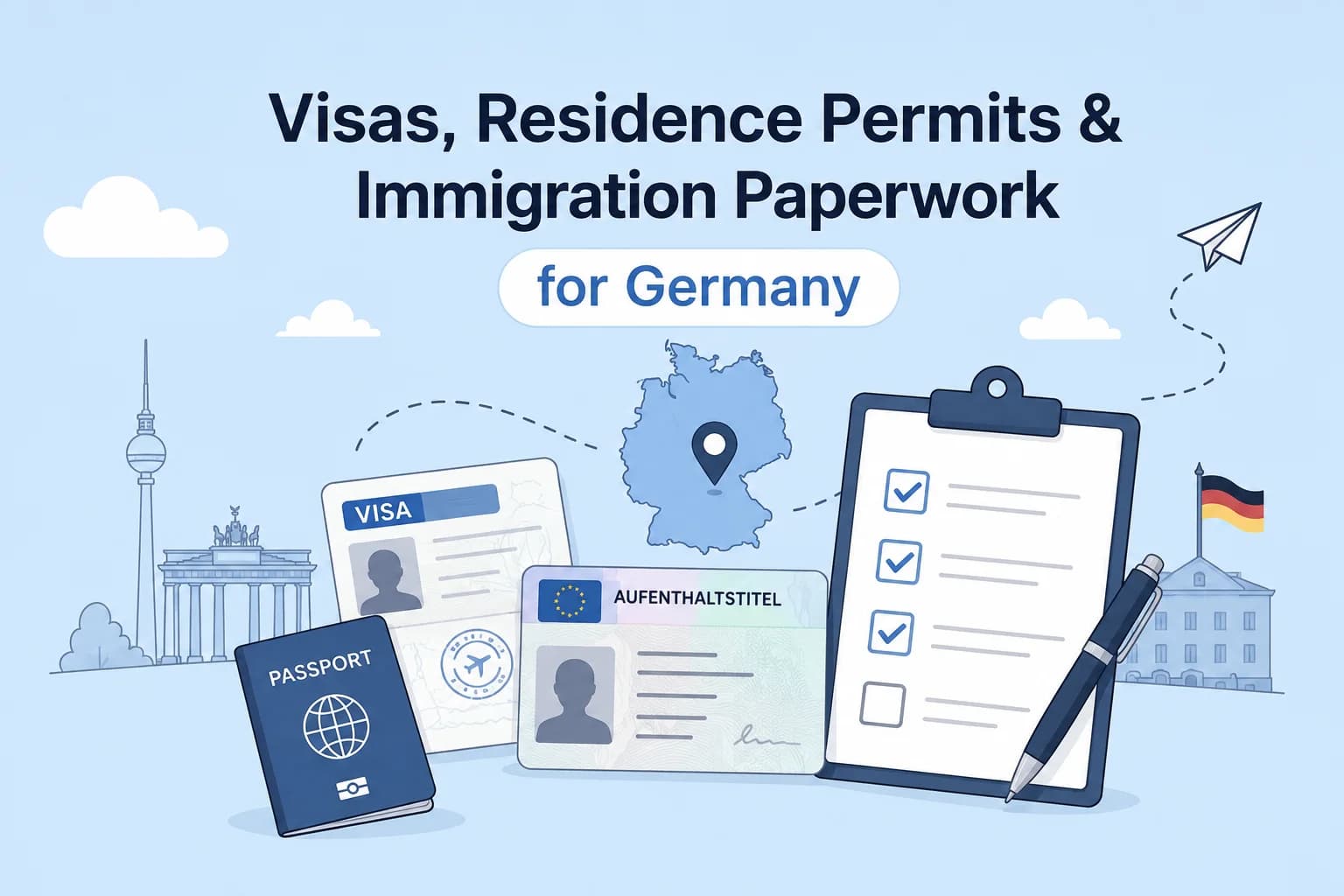
Visa and Residence Permit Integration

The most significant change for 2026 is the "Digital Residence Permit." Under the latest Ministry of the Interior roadmap, expats can now renew their Blue Cards or specialized work permits via the BundID portal. The system uses the "Once-Only" principle: once your biometric data is captured at the first point of entry, you do not need to resubmit it for renewals or changes of employer.

  • Actionable Data Point: The 2024 Skilled Immigration Act’s final phases, implemented in late 2025, mean that BundID users now receive automated notifications six months before a permit expires.
  • The "Opportunity Card" (Chancenkarte): For those entering the market, the points-based system is now managed entirely through BundID, with a projected processing time reduction from 4 months (2023) to 14 days (2026).

Tax and Social Transparency

The BundID is now linked directly to the ELSTER portal. By early 2026, the Finanzamt has scheduled the rollout of "pre-filled returns" for high-earning expats. The system pulls data from your employer, your health insurance provider, and your bank via the BundID's secure handshake.

The Legal Landscape: Tax and Privacy

Expats must be aware of the 2025 Tax Relief Act (Wachstumschancengesetz), which, while offering incentives for business investment, has tightened the reporting requirements for foreign assets.

If you are a US expat or a Third-Country National (TCN) with assets abroad, the BundID serves as the portal through which the German authorities reconcile the Common Reporting Standard (CRS) and FATCA data. The anonymity that once existed in the fragmented German paper system is gone. The 2026 fiscal year marks the first period where the "Transparency Register" and BundID are fully interoperable, meaning the German government has a real-time view of company ownership and high-value real estate holdings.

Local "On the Ground" Insight: The Cultural Shift

Despite the digital veneer, the "German Way" persists in nuanced forms. A common mistake for incoming professionals is assuming that digital equals informal.

  1. The Digital Signature (QES): While you can apply for a permit via BundID, the most rigorous legal contracts still require a Qualified Electronic Signature. Ensure your BundID is set to the "High" security level (using a physical ID card or the eID function of your phone). A "Low" security login is insufficient for housing contracts or opening brokerage accounts.
  2. The "Termin" Culture: Even as services move online, the concept of the appointment remains. Digital slots for the few remaining in-person services (like initial registration or Anmeldung) are often released at 7:00 AM CET. Successful expats are using automated scripts or third-party "concierge" apps to snag these slots.
  3. Data Privacy (Datenschutz): You will encounter frequent prompts regarding GDPR (DSGVO). In Germany, the culture of "Data Parsimony" (Datensparsamkeit) is alive. While the BundID streamlines things, the government will still ask you to confirm consent for every single data transfer between departments. It is not an "accept all" culture like in the US or UK.

The Skilled Immigration Act: 2026 Outlook

The Federal Ministry of Labour and Social Affairs has signaled that by mid-2026, the "Points System" for the Opportunity Card will be adjusted to favor those with specific expertise in AI, Green Energy, and Healthcare Management.

For the professional already in the country, the BundID offers a streamlined path to Permanent Residency (Niederlassungserlaubnis). The 2024 law reduced the residency requirement from five years to three for those with high C1-level German or exceptional professional achievements. In 2026, the application for this status is a "One-Click" process for eligible BundID users, provided their pension contributions (tracked via the Deutsche Rentenversicherung) meet the threshold.

Strategic Actionable Outlook

For the professional looking at the German market in 2026, the strategy has changed from "navigating the system" to "optimizing the digital profile."

  • Immediate Action (0-3 Months): Prior to arrival, or immediately upon receipt of your residence permit, activate the eID function. Do not wait until you need it. The physical "Transport PIN" letter is still the most common point of failure in the digital chain.
  • Mid-Term Strategy (6-12 Months): Consolidate your digital footprint. Link your BundID to your ELSTER account and your health insurance app (e.g., TK-App or Meine AOK). This ensures that by the end of the 2026 tax year, your filings are largely automated, saving thousands in tax consultant (Steuerberater) fees.
  • Long-Term Optimization: Monitor the "Digital Pension Overview" (Digitale Rentenübersicht), which is now fully accessible via BundID. For expats who may not spend their entire career in Germany, understanding your accrued pension rights in real-time is vital for global retirement planning.

Germany in 2026 is a country in the midst of a paradox: it remains expensive and structurally rigid, yet it has built a digital infrastructure that, if mastered, offers a level of administrative efficiency that rivals Singapore or Estonia. The BundID is the key. For the expat who treats it as a critical business tool rather than a bureaucratic chore, the path to a successful German tenure is significantly clearer.

The era of the fax machine is finally ending; the era of the authenticated login has begun. Don't lose your PIN.

Subscribe to Our Newsletter

Welcome to our newsletter hub, where we bring you the latest happenings, exclusive content, and behind-the-scenes insights.

*Your information will never be shared with third parties, and you can unsubscribe from our updates at any time.