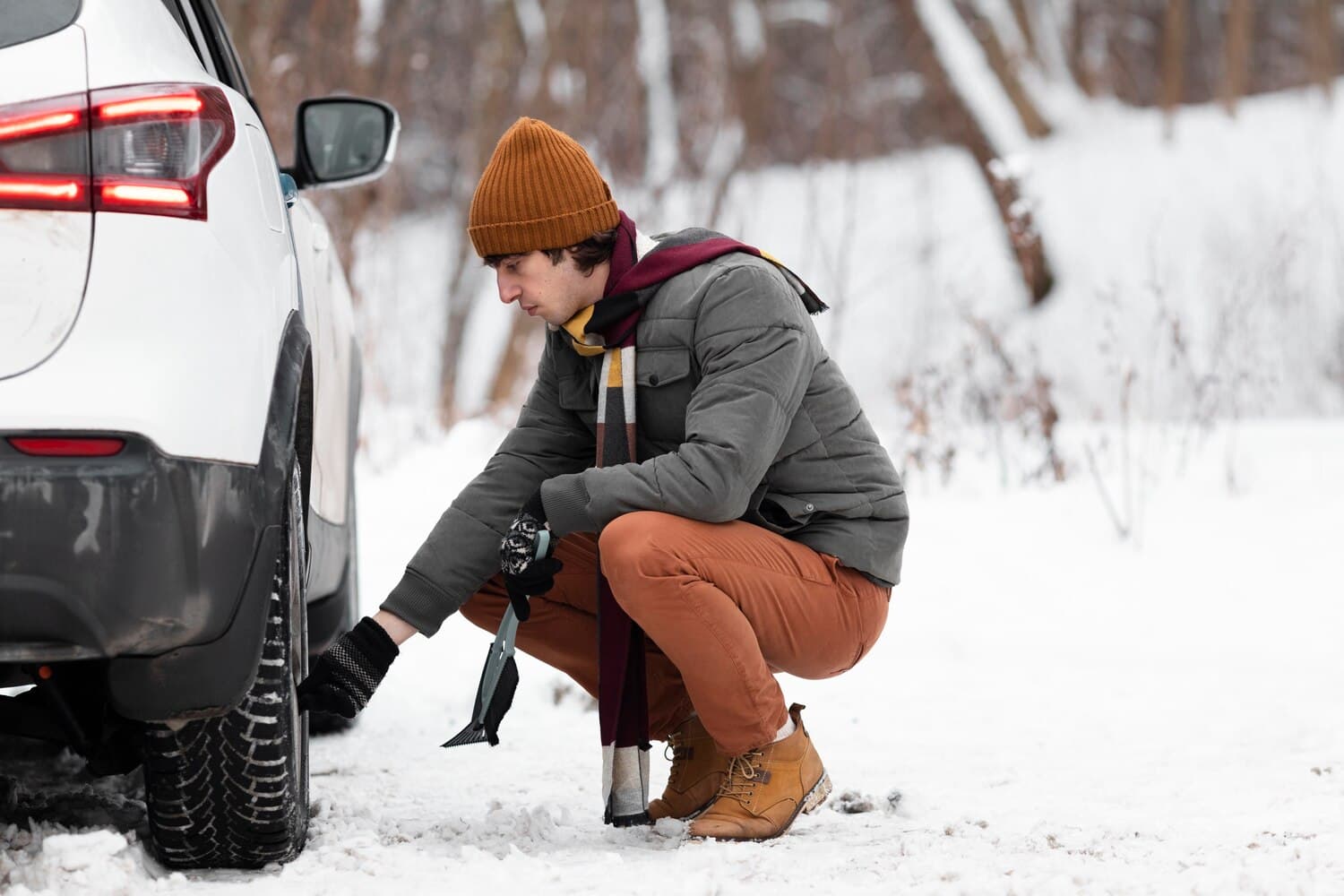
Winter Tires: The Mandatory Dates and Studded Tire Rules 2026

9 min read
Public TransportationEstonia
Winter Tires: The Mandatory Dates and Studded Tire Rules 2026
Public Transportationestoniadrivingsafety

The first frost hit the windshields of Munich and Zurich a full ten days earlier than the ten-year average this year, serving as a cold reminder to the thousands of expatriate executives navigating the continent's roadways. For the professional relocated to the DACH region (Germany, Austria, Switzerland) or the Scandinavian corridor, the transition from summer to winter is no longer a matter of personal discretion. It is a high-stakes regulatory hurdle where a missed deadline or the wrong sidewall marking can result in immediate fines, the voiding of insurance policies, and, in increasingly frequent cases, the impounding of the vehicle.

As we enter the 2025–2026 winter season, the grace periods for older tire standards have officially expired. The "M+S" (Mud and Snow) designation, once the gold standard for versatility, has been relegated to the history books of European transport law. For the expat professional, the logistics of vehicle compliance have become a critical line item in the annual mobility budget.

The 3PMSF Mandate: A New Regulatory Baseline

The most significant shift for the 2025–2026 cycle is the absolute enforcement of the 3PMSF (Three-Peak Mountain Snowflake) symbol. While previous years allowed for a transition period where tires marked only with "M+S" were tolerated if manufactured before 2018, that window has slammed shut.

In Germany, according to the latest directives from the Federal Ministry of Digital and Transport, any driver caught in "wintry conditions"—defined by black ice, slush, or snow—without the 3PMSF symbol on all four wheel positions faces immediate sanctions. This is no longer just about traction; it is about legal certification. The 3PMSF marking indicates the tire has undergone a standardized regulatory test (the ASTM E1136-14) to prove at least 25% better traction on packed snow than a standard reference tire.

For those moving vehicles between North America and Europe, the stakes are even higher. Many "All-Season" tires sold in the United States or the UAE do not carry the 3PMSF certification required by European law. Bringing a luxury SUV from a sun-belt posting to a European headquarters without accounting for a full tire swap is an oversight that now costs thousands in immediate retrofitting at port-of-entry rates.

The Hard Numbers: 2025/2026 Cost Analysis

The cost of compliance has shifted upward, driven by a 12% projected increase in raw material costs for high-silica rubber compounds and the energy-intensive manufacturing processes required for modern "smart" tires. For the expat professional, the financial impact is felt not just in the purchase price, but in the logistics of seasonal storage.


Table 1: Comparative Costs for Premium Winter Tire Sets (18-20 inch rims)

Estimated based on market trends and manufacturer forecasts for the 2025-2026 season.

Metric 2024 Actual (Avg) 2025/2026 Projected (Avg) % Change
Set of 4 Premium Tires (Michelin/Continental) $950 - $1,200 $1,100 - $1,450 +18%
Seasonal Mounting & Balancing $80 - $120 $105 - $150 +28%
"Tire Hotel" (6-month storage) $100 - $150 $130 - $185 +25%
Non-Compliance Fine (Germany/Austria) €60 - €120 €85 - €180 +45%

Table 2: Mandatory Dates and Requirements by Jurisdiction (2025-2026)

Country Mandatory Period / Condition Studded Tire Legality Specific Requirements
Germany Situation-based (Ice/Snow) Prohibited 3PMSF Symbol Mandatory
Austria Nov 1 – April 15 Restricted (Fees Apply) 4mm min. tread depth
France (Loi Montagne II) Nov 1 – March 31 Permitted (Nov-March) Alpine zones only
Norway Nov 1 – 1st Monday after Easter Permitted (Daily Fee) 3mm min. tread depth
Sweden Dec 1 – March 31 Permitted (Oct-April) 3mm min. tread depth
Quebec, Canada Dec 1 – March 15 Permitted 3PMSF Mandatory

The "Tire Hotel" Economy and EV Complications

For the urban expat living in high-density areas like Paris, Zurich, or Oslo, the most significant logistical hurdle is not the cost of the rubber, but the physical storage of the off-season set. The "Tire Hotel" (Reifenhotel or Pneuhotel) has become a multi-million dollar industry. Space is at a premium; many dealerships in major hubs are reporting 95% capacity for the 2025–2026 season as early as August.

Furthermore, the rise of Electric Vehicles (EVs) among the expat demographic has introduced a new technical variable. EVs are significantly heavier than their internal combustion counterparts and deliver instantaneous torque. This necessitates "HL" (High Load) rated winter tires. For the 2025–2026 season, supply chains for HL-rated 3PMSF tires are expected to be tighter than standard variants. Professionals driving a Tesla Model X or an Audi e-tron should expect to pay a 20-25% premium over standard winter tires to ensure the load rating is compliant with their vehicle’s registration papers.

Studded Tires: The Cost of Friction

The rules regarding studded tires (spikes) remain a fractured landscape across the Northern Hemisphere. In Norway and Sweden, studded tires are common and often necessary for rural commutes. However, major cities have moved to disincentivize their use due to the "wear-and-tear" tax.

In Oslo, for the 2025-2026 season, the "piggdekkgebyr" (studded tire fee) is forecasted to remain a significant daily or seasonal cost. For a professional commuting into the city center, the daily permit can add up to several hundred dollars over the winter season. Conversely, in Germany and most of Central Europe, studded tires remain strictly prohibited to protect the autobahn infrastructure.

For the expat traveling across borders—for instance, driving from a home base in Stockholm to a winter retreat in the Austrian Alps—the logistics of "tire switching" at the border or opting for a high-performance non-studded (friction) tire is a critical strategic decision. The modern friction tire has improved to the point where, according to 2025 performance data, the gap between studded and non-studded on urban ice has narrowed to less than 10% in braking distance.

The Invisible Risk: Insurance and Liability

The "Hard Numbers" section above highlights the fines, but the true financial danger for the 2025–2026 season lies in the fine print of insurance contracts. Most major European insurers, including Allianz, AXA, and Zurich, have updated their "Gross Negligence" clauses.

Under these updated terms, driving with summer tires during a designated winter period or during wintry conditions is increasingly classified as "preventable negligence." If an expat is involved in an accident—even if they are not the primary party at fault—the insurance provider may legally reduce the payout by 30% to 50%, or in some jurisdictions, deny the third-party liability claim entirely, leaving the driver personally liable for damages.

In Switzerland, the 2025 legal precedent has trended toward stricter accountability. While there is no "fixed date" for winter tires, the courts have increasingly used the "7-degree rule" (the temperature at which summer rubber compounds lose elasticity) as a benchmark for negligence. If the ambient temperature was below 7°C (45°F) at the time of an accident and the vehicle was on summer tires, the driver’s legal standing is significantly compromised.

Local "On the Ground" Nuances

Beyond the statutes and the spreadsheets, there is a cultural rhythm to tire compliance that the seasoned expat must master.

In Germany, the mnemonic "O bis O" (Oktobber bis Ostern)—October to Easter—is more than just a suggestion; it is the social contract. To be the neighbor who is still jacking up their car on the first snowy morning in November is to mark oneself as an outsider. Mechanics are traditionally booked out six to eight weeks in advance of the October 1st transition. For a professional relocating in the autumn, the first task upon receiving a company car should be the immediate scheduling of the November swap.

In France, the Loi Montagne II (Mountain Law II) remains in its strict enforcement phase for 2026. This law affects 48 departments in mountainous regions (Alps, Pyrenees, Vosges, Jura, Massif Central, and Corsica). Local prefectures have been granted the authority to mandate either 3PMSF tires or the possession of snow chains/socks in the vehicle. The "on-the-ground" reality is that police checkpoints at the base of ski-resort access roads have become routine on Friday evenings and Sunday afternoons.

In Canada, specifically Quebec, the hard deadline of December 1st remains immovable. However, the 2025–2026 trend shows an increasing number of expats in British Columbia opting for the "M+S with Snowflake" designation for the Sea-to-Sky Highway (Vancouver to Whistler), where police enforcement has been heightened following a series of high-profile winter closures.

Actionable Outlook: Navigating the 2025-2026 Season

The global mobility landscape is becoming more regulated, and vehicle compliance is at the forefront of this shift. For the expat professional, the strategy for the next 12–24 months should be proactive rather than reactive.

  • Procurement Lead Times: Order new winter tire sets no later than August. The shift toward EV-specific tires (HL-rated) has created niche supply chain bottlenecks that often result in backlogs during the "October Rush."
  • The 3PMSF Audit: Conduct a physical audit of all family vehicles. Ensure the "Three-Peak Mountain Snowflake" symbol is present. If your vehicle is currently equipped with "M+S" only tires, they must be replaced before the first frost of 2025 to maintain legal and insurance compliance in the DACH region.
  • Leasing Contract Review: For those with company-provided leases, verify who is responsible for the "seasonal swap" logistics. Many 2025 lease agreements now include "Tire Hotel" services as a standard line item to mitigate the risk of employee negligence and subsequent insurance hikes for the firm.
  • Digital Documentation: Keep a digital copy of your tire purchase receipt and the technical specifications of your tires (including tread depth at the last service) in your vehicle’s cloud-synced folder. In the event of a dispute with an insurance adjuster or a roadside inspection, this data is invaluable.

The 2025–2026 winter season marks the end of the "transitional era" for winter tire regulations. What was once a recommendation of "best practice" has solidified into a rigorous, data-driven legal requirement. For the professional navigating a global career, ensuring that two tons of German or Swedish engineering are making the correct contact with the asphalt is not just a matter of safety—it is a mandatory component of modern executive mobility.

Subscribe to Our Newsletter

Welcome to our newsletter hub, where we bring you the latest happenings, exclusive content, and behind-the-scenes insights.

*Your information will never be shared with third parties, and you can unsubscribe from our updates at any time.