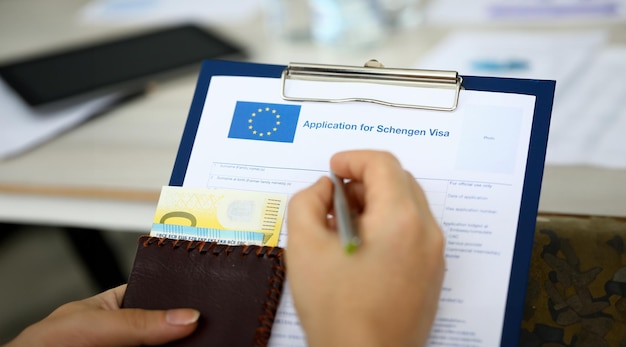

Germany's 2026 EU Blue Card: New Salary Thresholds and Shortage Occupations

The German labor market in 2026 is defined by a paradox: a softening industrial core contrasted with a desperate, structural hunger for high-tier human capital. For the international professional, the primary gateway remains the EU Blue Card, a permit that has undergone its most significant liberalization in a decade. However, the path to residency is no longer just a matter of holding a degree; it is now a calculated negotiation with shifting salary floors and an expanded taxonomy of "shortage occupations." To navigate Germany in 2026 is to understand that the government has lowered the barrier to entry while the cost of living and social security contributions have simultaneously raised the stakes for what constitutes a "viable" middle-class existence.
[image query={modern Berlin office skyline with Reichstag in background}]
The 2026 salary thresholds are tied to the federal government’s annual adjustment of the social security contribution ceiling (Beitragsbemessungsgrenze). Following the significant inflationary adjustments of late 2024 and 2025, the 2026 thresholds have stabilized at a higher plateau. For standard occupations, the projected minimum gross annual salary is expected to hover around €48,500. For "shortage occupations" and "new entrants" (those who have graduated within the last three years), the threshold is scheduled to sit at approximately €43,800. These figures are not mere administrative hurdles; they represent a "pre-check" by the Federal Employment Agency (Bundesagentur für Arbeit) to ensure that foreign talent is not used to underbid the domestic wage structure.

[image query={professional handshake in front of a German corporate headquarters}]
A critical distinction for 2026 is the "New Entrant" category. Previously, the Blue Card was the preserve of mid-career professionals. The current framework explicitly targets the under-30 demographic. If a professional holds a recognized degree and is within three years of graduation, they qualify for the lower salary threshold regardless of whether their job falls under a shortage list. This is a strategic move to capture "high-potential" labor before it settles in competing markets like the Netherlands or Canada. For the expat, this means that a junior software developer or a marketing analyst can now secure a Blue Card with a starting salary that was previously deemed insufficient for high-stakes immigration.

[image query={diverse young professionals working in a tech hub in Munich or Hamburg}]
The definition of "Shortage Occupations" (Mangelberufe) has expanded significantly beyond the traditional "STEM" silos. While mathematics, IT, natural sciences, engineering, and human medicine remain the bedrock, the 2026 list under review includes expanded roles in the "care economy" and education. Specifically, manufacturing managers, professional services managers, and specialized nursing professionals now fall under the lower threshold. This expansion reflects a reality where Germany’s demographic "tipping point" has moved from a future threat to a present crisis. The shortage is no longer just about writing code; it is about managing the infrastructure of an aging, highly complex society.
[image query={engineer inspecting a renewable energy site in Germany}]
For IT professionals, the 2026 landscape offers a unique "non-degree" track. Germany has finally institutionalized the reality that in technology, experience often outpaces formal education. An applicant with at least three years of relevant professional experience within the last seven years can qualify for a Blue Card without a university degree, provided their salary meets the shortage threshold. This is a profound shift in German administrative logic, which has historically been obsessed with Urkunden (certificates). However, the burden of proof is high: references must be granular, verifiable, and translated with precision. A vague "Developer" title on a CV will not suffice; the authorities require a mapping of competencies to the German classification of occupations.
[image query={close up of German residence permit EU Blue Card document}]
The "Threshold Trap" remains the most common point of failure for 2026 applicants. Many expats negotiate a gross salary that sits exactly at the threshold, only to find that their contract’s structure—bonuses, "13th-month" payments, or car allowances—is not fully recognized by the Ausländerbehörde (Foreigners' Authority). Only guaranteed, fixed remuneration counts toward the Blue Card minimum. If a portion of your €50,000 salary is performance-linked or contingent on company profits, you may find your application rejected or downgraded to a standard work permit, which carries fewer benefits for family reunification and permanent residency.
[image query={busy German immigration office interior with professionals waiting}]
Furthermore, the 2026 regulatory environment is increasingly focused on "comparability." Even if you meet the salary threshold, the Federal Employment Agency can block an application if the proposed salary is significantly lower than what a local German employee would earn in the same role in that specific region. A €50,000 salary for a Senior Engineer in Munich may be viewed as "wage dumping" because the local median is significantly higher, even if it exceeds the federal Blue Card minimum. The geographic "salary delta" is a factor that many expats overlook, assuming the federal floor is the only metric that matters.
[image query={Munich cityscape with focus on high tech district}]
Mobility within the EU is a primary selling point of the Blue Card, and in 2026, the "12-month rule" is the standard. After holding a Blue Card in another EU member state for 12 months, a professional can move to Germany for "highly qualified employment" without needing a new visa before entry. They only need to notify the German authorities. This creates a more fluid European labor market, allowing professionals to follow project-based cycles or corporate transfers with minimal friction. However, the clock for German permanent residency (Niederlassungserlaubnis) generally resets or requires specific aggregation, a nuance that demands long-term tax planning.
[image query={high speed ICE train traveling through the German countryside}]
The timeline for permanent residency remains one of the most attractive features of the German Blue Card. In 2026, those with B1-level German language proficiency can apply for settlement after just 21 months of employment. Those without significant language skills (A1 level) must wait 33 months. In a global economy where permanent status is becoming harder to obtain in the Anglosphere, Germany’s "fast track" is its most competitive asset. The warning, however, is administrative: while the law allows for settlement at 21 months, the backlog at municipal offices in hubs like Berlin or Frankfurt can add six to nine months to the actual processing time.
[image query={German language school classroom with adult students}]
One must also account for the "Social Security Squeeze." As the salary thresholds rise, so do the mandatory contributions to pension, health, and unemployment insurance. For a professional earning the 2026 threshold of €48,500, the "net" take-home pay in Germany (Tax Class I, single) is significantly lower than in many other jurisdictions. This is the price of the "social contract": high-quality infrastructure, public transit, and a safety net. An expat moving in 2026 must calculate their life not on the gross figure that satisfies the visa office, but on the net reality of a high-tax, high-service economy.
[image query={a person reviewing a German salary slip with calculator and coffee}]
The 2026 Blue Card is less of a trophy and more of a contract. The German state is offering a streamlined path to one of the world’s most stable residencies in exchange for specific, high-value labor in sectors that are currently the bottleneck for German economic growth. The risk for the professional is not the policy itself, but the lack of granularity in their own planning. Meeting the threshold is the beginning of the conversation, not the end. Success in this landscape requires a meticulous alignment of job description, regional wage benchmarks, and a clear-eyed understanding of the net-salary reality.
[image query={German flag flying in front of a modern glass office building}]
The most practical recalibration for any professional eyeing Germany in 2026 is to move beyond the "Berlin Start-up" myth. The real opportunities for Blue Card holders are increasingly found in the "Mittelstand" (medium-sized enterprises) located in "B-cities" like Stuttgart, Leipzig, or Düsseldorf. These regions often offer higher "real" wages when adjusted for housing costs, while still providing the salary levels required to meet the 2026 federal thresholds. To ignore the regional economic data in favor of the capital’s cultural pull is a common mistake that can lead to a "salary-rich, cash-poor" existence.
Subscribe to Our Newsletter
Welcome to our newsletter hub, where we bring you the latest happenings, exclusive content, and behind-the-scenes insights.
*Your information will never be shared with third parties, and you can unsubscribe from our updates at any time.