
AD
VocabAI The only app an expat needs • Learn easy
INSTALL

The Expat’s Guide to Finding a Flat in Germany: ImmoScout24 vs. WG-Gesucht

7 min read
0Rental MarketGermany
The Expat’s Guide to Finding a Flat in Germany: ImmoScout24 vs. WG-Gesucht

For a professional arriving in Berlin, Munich, or Frankfurt in early 2026, the housing market does not offer a welcome; it presents a structural gauntlet. The narrative that Germany is a "renter’s paradise" due to robust tenant protections has been effectively dismantled by a decade of supply-side stagnation and a 2024-2025 construction slump. As we move into 2026, the deficit of apartments in major metropolitan areas is projected to exceed 800,000 units. For the expat, navigating this requires more than a budget; it requires an understanding of two distinct digital ecosystems—ImmoScout24 and WG-Gesucht—which operate on entirely different social and economic logics.

crowded apartment viewing

To treat these platforms as interchangeable is a fundamental strategic error. ImmoScout24 is the institutional gatekeeper, the domain of professional property managers (Hausverwaltungen) and rigorous financial vetting. WG-Gesucht, conversely, is a social marketplace, governed by the "casting" culture of flat-shares (Wohngemeinschaften) and short-term sublets. In a market where a single listing in Berlin-Mitte can generate 500 inquiries within an hour, the choice of platform determines not just where you live, but the level of institutional scrutiny you will face.
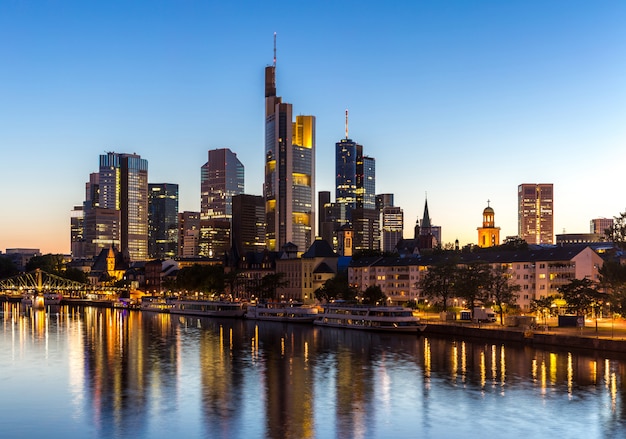
Frankfurt skyline

ImmoScout24: The Industrial Efficiency of the "Bewerbermappe"

ImmoScout24 is the undisputed heavyweight of the German real estate market, but for the uninitiated, it is a pay-to-play environment. By 2025, the "MieterPlus" subscription has moved from a luxury to a baseline requirement. Without the premium tier, your inquiry is algorithmically deprioritized, often arriving in a landlord’s inbox hours after the first hundred applicants have already been processed. In the high-velocity markets of Stuttgart or Hamburg, an inquiry sent three hours after a post is live is effectively shouting into a vacuum.

The platform demands a "Bewerbermappe"—a digital or physical application folder that functions as a financial biography. This is where many expats stumble. German landlords are risk-averse to a degree that often feels intrusive to North Americans or Brits. The folder must contain the Schufa-Auskunft (a credit score that is difficult to build without a German bank account), the last three months of salary slips (Gehaltsnachweise), and a Mietschuldenfreiheitsbescheinigung—a document from your previous landlord confirming you owe no rent. For a professional relocating from abroad, the absence of these specific German documents is often an automatic disqualifier.


Furthermore, the 2026 market is increasingly dominated by "Indexmiete" (indexed rent) contracts. On ImmoScout24, professionals must look past the "Kaltmiete" (base rent) and "Warmmiete" (rent including heating and utilities). With energy prices stabilized but still higher than pre-2022 levels, the "Nebenkosten" (ancillary costs) are a significant variable. An informed expat must scrutinize the energy certificate (Energieausweis) of the building; a charming Altbau with a Class G rating will result in a "Warmmiete" that could be 30-40% higher than the base rent during winter months.

WG-Gesucht: The Social Filter and the "Zwischenmiete" Strategy

If ImmoScout24 is an interview with a bank, WG-Gesucht is an audition for a social club. While originally designed for students, the platform has become the primary tool for young professionals seeking "Zwischenmiete" (temporary sublets) or high-end flat-shares. In 2026, the "temporary" market is where most expats find their first foothold, as it bypasses the immediate need for a Schufa score or a long-term German employment contract.

The logic of WG-Gesucht is personality-driven. Landlords here are often individuals or existing tenants looking for a "fit." A generic inquiry will be ignored. Success on this platform requires a curated profile that emphasizes stability, cleanliness, and social compatibility. However, there is a legal trap: many "Zwischenmiete" listings are technically illegal sublets without the owner’s permission (Untervermietung). If an expat lacks a "Wohnungsgeberbestätigung" (a landlord’s confirmation of residence), they cannot register their address at the Bürgeramt (Anmeldung). Without an Anmeldung, you cannot get a Tax ID, and without a Tax ID, your employer will tax you at the highest possible bracket (Steuerklasse 6).

The strategic use of WG-Gesucht in 2026 is to secure a "furnished" short-term stay that allows for the collection of the three months of German pay stubs required to be competitive on ImmoScout24. This "stepping stone" approach is often the only viable path for those arriving without a relocation agent.

The Economic Reality: Mietpreisbremse and the Furniture Surcharge

Investors and landlords in German A-cities have become adept at navigating the Mietpreisbremse (rent brake), which theoretically limits how much a landlord can increase rent above the local benchmark (Mietspiegel). As of 2025, a common tactic seen on both platforms is the "furnished surcharge." By adding a bed, a desk, and a few lamps, landlords can bypass the rent brake, charging a "utility fee" for the furniture that bears little relation to its value.

Expats should be aware that the German legal system is slowly catching up to this. Courts have begun ruling that the furniture surcharge must be transparently calculated. However, in a market where demand outstrips supply by a factor of ten, few tenants have the leverage or the appetite to sue their landlord upon moving in. For the 2026 arrival, the "furnished" price is effectively the market price, regardless of the rent brake’s intent.

Navigating the Digital Risk: Scams and Red Flags

The desperation of the 2025/2026 housing market has emboldened sophisticated scammers on both platforms. The patterns are consistent: a stunning apartment in a prime location (e.g., Prenzlauer Berg or Schwabing) offered at a suspiciously "fair" price. The "landlord" claims to be abroad and requests a deposit via Airbnb or a wire transfer before a viewing.

The rule in Germany remains absolute: Never transfer money—neither a deposit (Kaution) nor the first month’s rent—before you have physically inspected the apartment and signed a contract. Genuine professional landlords on ImmoScout24 will never ask for "reservation fees." On WG-Gesucht, if the deal seems too good to be true, it is almost certainly a data-harvesting or financial scam.

The "Anmeldung" Constraint: A Non-Negotiable Requirement

The most critical distinction for an expat is whether a listing offers Anmeldung. This is the process of registering your address with the local authorities. In the current regulatory environment, many listings on WG-Gesucht—especially "short stays"—specifically state "No Anmeldung possible." For a tourist, this is irrelevant. For a professional on a work visa, this is a deal-breaker.

Without Anmeldung, your legal status in Germany is precarious. You cannot open a traditional bank account (though neobanks like N26 or Revolut offer some flexibility), you cannot receive your social security number, and you cannot finalize your health insurance. When scanning listings, the term "Anmeldung möglich" should be the first filter applied.

Strategic Recalibration for 2026

The 2026 housing market in Germany is not a place for the passive. To succeed, an expat must treat the search as a part-time job. This means:

  1. Financial Readiness: Having the equivalent of three months' "warm" rent ready in a liquid account for the deposit (Kaution).
  2. Document Primacy: Translating employment contracts and having a "Letter of Intent" from the employer if pay stubs are not yet available.
  3. Platform Mastery: Using ImmoScout24 for the "forever home" search while utilizing WG-Gesucht for the initial 3-6 month landing period.
  4. Local Intelligence: Understanding that "Kaltmiete" is a fiction; the "Warmmiete" is the only number that affects your monthly cash flow.

The German rental market rewards the prepared and punishes the naive. The "perfect flat" does not exist in the current climate; only the "available flat" does. By shifting expectations from finding a dream home to securing a legal and financial anchor, the expat can navigate the friction of the German bureaucracy and eventually transition from a temporary sublet to a permanent residence. The tools—ImmoScout24 and WG-Gesucht—are effective, but only when used with a clear-eyed understanding of the structural deficits they serve.

Subscribe to Our Newsletter

Welcome to our newsletter hub, where we bring you the latest happenings, exclusive content, and behind-the-scenes insights.

*Your information will never be shared with third parties, and you can unsubscribe from our updates at any time.

Comments

0/2000