
AD
VocabAI The only app an expat needs • Learn easy
INSTALL

Sweden’s 2026 Rental Market Reforms: Why Intermediate Contracts are Trending in Gothenburg

7 min read
0Contracts UtilitiesSweden
Sweden’s 2026 Rental Market Reforms: Why Intermediate Contracts are Trending in Gothenburg
Contracts Utilities

For a decade, the advice given to a professional moving to Gothenburg was as standardized as a flat-pack shelf: join the Boplats queue immediately, accept that your first three years will be a transient blur of precarious sublets, and never, under any circumstances, expect to live in the city center without a decade of "points" or a stroke of extraordinary luck. By early 2026, that binary—the choice between the impossible first-hand contract and the unstable second-hand "hand-me-down"—has been disrupted by a legislative evolution. The rise of the intermediate contract (mellanformer) represents a pragmatic, if controversial, surrender to the reality that Gothenburg’s industrial expansion cannot wait for a housing queue that moves at the speed of glacial erosion.
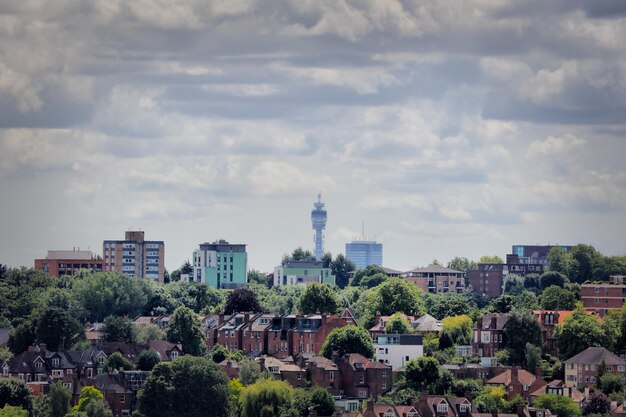
Gothenburg urban skyline

The shift centers on the 2026 Rental Reform Package, a series of adjustments to the Swedish Land Code designed to loosen the "utility value" (bruksvärde) system for specific professional demographics. For the international engineer at Volvo’s Torslanda plant or the researcher at AstraZeneca, the "intermediate" model offers a middle ground: professionally managed, long-term rentals that bypass the municipal queue but lack the indefinite tenure of a traditional first-hand lease. This is not a deregulation of the market, but rather a surgical opening for a city that has become the engine room of Sweden’s green industrial transition.

The fundamental tension in Gothenburg has always been the mismatch between its economic ambition and its residential rigidity. As the city cements its status as a global hub for battery technology and maritime logistics, the demand for high-skill labor has outpaced the delivery of "regular" housing. The 2026 reforms recognize that the "second-hand" market—often characterized by individuals renting out their apartments for a year while traveling—is insufficient for a professional workforce requiring stability for three to five years. Intermediate contracts fill this gap by allowing professional housing providers to lease "blocks" of units to corporations or directly to "qualified" tenants, under a revised framework where the tenant waives certain possession rights (besittningsskydd) in exchange for immediate access and professional management.

modern apartment interior

To understand the 2026 landscape, an expat must distinguish between the "presumption rent" (presumtionshyra) and these new intermediate models. While presumption rents allowed developers to charge higher rates for new builds for 15 years, they did nothing to solve the queue problem. The intermediate model, however, leverages "Block Rental" (blockhyra) agreements that were previously reserved for student housing or elderly care. Now, these are increasingly applied to the "Key Worker" and "International Talent" sectors in Gothenburg. For the tenant, this means a monthly rent that is roughly 20-30% higher than a traditional rent-controlled unit but significantly lower and more secure than the "black market" or "grey market" sublets that long plagued the Lindholmen and Majorna districts.

The financial data for 2026 indicates that a two-bedroom intermediate apartment in a central Gothenburg district like Masthuggskajen now commands between 16,000 and 19,000 SEK per month. While this might seem reasonable by London or New York standards, it is a significant departure from the 11,000 SEK one might pay for a traditional first-hand contract in the same area—if one had 15 years of queue time. The premium paid is, in effect, a "speed tax." Professionals are increasingly choosing this tax to avoid the "sublet carousel," where every 12 months, a tenant is forced to move because the original owner of the lease is required by their housing association (bostadsrättsförening) to move back in or sell.

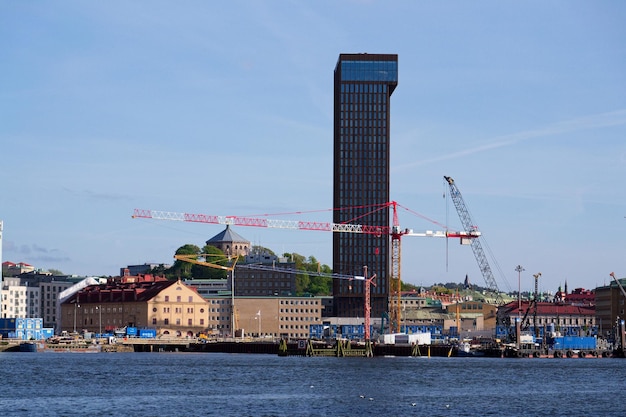
Gothenburg harbor construction

However, the legal nuance of the intermediate contract is where the risk lies. The most critical factor for an incoming professional is the "Waiver of Security of Tenure." Under standard Swedish law, a tenant who stays longer than two years gains a powerful right to stay indefinitely. In the intermediate model trending in Gothenburg, the regional Rent Tribunal (Hyresnämnden) has streamlined the process for landlords to require a signed waiver of this right as part of the initial contract. For the expat, this means that while the contract might be guaranteed for three years, there is no automatic right to stay for a fourth. It is a transactional relationship: you get the apartment today, but you agree to leave when the term ends.

This "term-limited" reality is causing a shift in how relocation packages are structured. In 2024, a "relocation allowance" might have covered a few months of temporary housing. In 2026, savvy professionals are negotiating for "Intermediate Differential Subsidies"—where the employer covers the gap between the traditional rent-controlled rate and the higher intermediate rate. Because Gothenburg’s labor market is so tight, particularly in power electronics and software engineering, employers are increasingly willing to swallow this cost to ensure their talent isn't living out of a suitcase in a suburban pendeltåg zone.

The geographical focus of these contracts is also specific. You will not find many intermediate contracts in the historic, rent-stabilized blocks of Linnéstaden. Instead, they are concentrated in the "New Gothenburg": Karlastaden (the skyscraper district), the refurbished docks of Eriksberg, and the emerging residential clusters around Mölndal. These are areas where the "presumption rent" model was already the norm, making the jump to intermediate professional leasing a smaller leap for developers.

A common misconception among newcomers is that these contracts are a "loophole." They are not. They are a formal, institutionalized response to a broken system. The Swedish Union of Tenants (Hyresgästföreningen), while traditionally protective of the first-hand queue, has been forced to concede ground in Gothenburg to prevent the city’s industrial clusters from becoming uncompetitive. The "Gothenburg Model" of 2026 is essentially a three-tier system: the "Vested" (those with old first-hand leases), the "Transients" (those in traditional one-year sublets), and the "Professionals" (those in intermediate contracts).

For those entering the Gothenburg market now, the strategy must be one of institutional alignment. Searching for "Rentals in Gothenburg" on generic platforms is increasingly a waste of time for high-earning professionals. The "inventory" for intermediate contracts is often held by specialized firms that interface directly with HR departments or through premium portals that require a Swedish BankID and proof of a "key industry" employment contract. The market has become tiered not just by price, but by professional credentials.

The most significant risk in this new landscape is the "Administrative Gap." Many intermediate contracts are tied to the duration of a work permit or a specific project. If a professional changes employers, the contract may contain a "termination on departure" clause that is far more aggressive than traditional Swedish rental laws. It is essential to have any intermediate contract reviewed for "employer-dependency" clauses, which can turn a housing solution into a leverage tool for the employer.

Looking toward the end of 2026, the trend suggests that intermediate contracts will become the default for any expat staying in Sweden for less than five years. The dream of the "first-hand contract" is being recalibrated as a long-term goal for those seeking permanent residency, rather than a prerequisite for moving to the city. The Swedish rental market is finally acknowledging that "time in queue" is a currency that international professionals do not possess and cannot afford to earn.

The warning for the incoming professional is simple: do not mistake the availability of these intermediate contracts for a move toward a free-market system. You are entering a highly regulated, high-cost niche designed specifically for you. While it offers a pathway out of the housing queue, it strips away the "forever home" protections that have defined Swedish life for a century. Enter the market with your eyes on the term-limit, and your relocation budget aligned with the 2026 "speed tax." The "intermediate" label is literal—it is a bridge, not a destination.

Subscribe to Our Newsletter

Welcome to our newsletter hub, where we bring you the latest happenings, exclusive content, and behind-the-scenes insights.

*Your information will never be shared with third parties, and you can unsubscribe from our updates at any time.

Comments

0/2000