AD
VocabAI The only app an expat needs • Learn easy
INSTALL

Beyond the Mechanical: Germany’s Vertical Infrastructure Faces a Digital Integrity Crisis

6 min read
0HousingGermany
Beyond the Mechanical: Germany’s Vertical Infrastructure Faces a Digital Integrity Crisis
Housing

For decades, the circular TÜV sticker affixed to the interior of a German elevator has served as a psychological and legal guarantee of physical safety. It signaled that the cables were taut, the brakes were responsive, and the mechanical integrity of the car was beyond reproach. However, as Germany enters 2026, this emblem of Teutonic engineering is being challenged by a reality the country’s regulatory framework was slow to anticipate: the vulnerability of the 'Smart Lift.' The German Technical Inspection Association (TÜV) has moved from quiet observation to urgent signaling, warning that the digital architecture of the nation’s 800,000 elevators is increasingly susceptible to cyberattacks that the current physical inspection cycles are ill-equipped to detect.
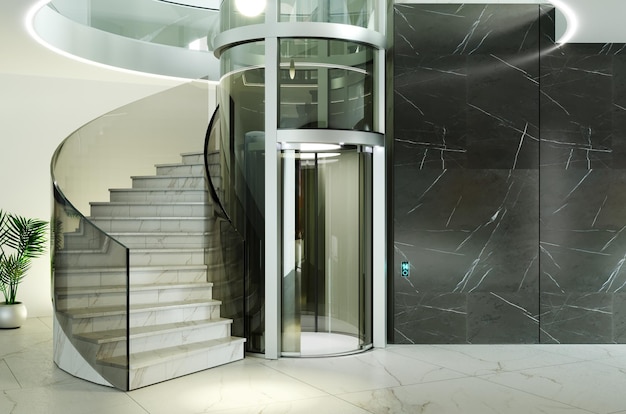
modern elevator interior

The shift is not merely theoretical. As building management systems (BMS) have migrated to the cloud to allow for remote maintenance and energy optimization, the air gap that once protected vertical transport has vanished. For the professional living in a Frankfurt high-rise or the facility manager overseeing a corporate campus in Munich, the risk is no longer just a mechanical failure, but a systematic digital compromise. The TÜV’s data suggests that a significant majority of elevators currently in operation lack even basic encryption for their communication modules, leaving them open to interference that can range from nuisance—disabling access to specific floors—to the critical immobilization of a building’s entire transit network.

The Connectivity Paradox and the 2G Sunset

The root of the current vulnerability lies in a forced technological migration. By 2026, the phased decommissioning of 2G and 3G networks across Europe has compelled elevator manufacturers and maintenance firms to transition emergency call systems to IP-based (Internet Protocol) hardware. While these LTE and 5G modules provide clearer communication and data pathways for 'predictive maintenance,' they also represent an unhardened entry point into the building’s internal network. Most legacy elevators were never designed with a 'secure by design' philosophy; their control units often utilize aging CAN bus systems that lack the authentication protocols necessary to rebuff a sophisticated digital intrusion.

cybersecurity digital code

What an informed professional must understand is that these systems are now part of the 'Internet of Things' (IoT) without the benefit of standard IT security oversight. In many German commercial properties, elevator maintenance is outsourced to third-party providers who utilize remote access to diagnose faults. If the service provider’s own network is compromised, the attacker gains a 'backdoor' into every building that provider services. This is not a speculative scenario; European cybersecurity regulators have already documented instances where administrative credentials for building controls were found for sale on dark-web forums, specifically targeting European metropolitan hubs.

The Regulatory Landscape in 2026

To address this, the regulatory environment in Germany is undergoing a sharp correction. The EU Cyber Resilience Act (CRA), which reaches its full enforcement milestone in 2026, now mandates that products with digital elements—including elevator control systems—must meet harmonized security standards. For German property owners, this translates into a mandatory update of the Betriebssicherheitsverordnung (Industrial Safety Ordinance). It is no longer sufficient to prove that the elevator won't fall; operators must now demonstrate that the system is resilient against unauthorized external access.

Projected data for the 2026 fiscal year suggests that insurance premiums for commercial real estate in Germany will increasingly hinge on 'Cyber-Physical' certifications. Facilities that fail to upgrade their lift communication modules to encrypted protocols face not only the risk of a 'Betriebsuntersagung' (an official order to cease operations) from the ZÜS (Zugelassene Überwachungsstelle) but also the loss of liability coverage. For the expatriate executive or business owner, this means that the choice of office space now requires a due diligence check on the building’s digital safety record, just as one would check for fire safety or energy efficiency ratings.

tuv safety sticker

The Mechanical Fail-Safe vs. Digital Hostage-Taking

A common misconception is that a cyberattack could cause an elevator to plummet. It is critical to distinguish between the 'Safety' (functional safety) and 'Security' (cybersecurity) of the system. The mechanical safety gear—the physical governor and the wedge brakes—operates independently of the software. A hacker cannot 'delete' the laws of physics or the tension of the safety springs. However, the danger lies in 'digital hostage-taking.' By manipulating the door sensors or the floor selection logic, an attacker can effectively trap occupants or render a building inaccessible to anyone with mobility issues, creating a high-pressure scenario for ransom demands.

Furthermore, the integration of elevators into larger smart-city grids introduces a macro-economic risk. In high-density districts like Berlin’s Potsdamer Platz or the Frankfurt banking quarter, the synchronized immobilization of vertical transport during peak hours would result in thousands of lost man-hours and significant physical bottlenecks. The TÜV’s warning highlights that the industry’s reliance on 'security through obscurity'—the idea that no one would bother to hack a lift—is an obsolete defense mechanism in an era of automated, wide-net scanning by malicious actors.

Practical Implications for Property Users and Owners

For those managing or occupying German property, the 'new normal' involves a recalibration of what constitutes building maintenance. The traditional annual mechanical check is being augmented by mandatory software patches. If you are a tenant in a building where the elevator displays frequently malfunction or the 'Notruf' (emergency call) system experiences intermittent connectivity issues, these may not be minor glitches but symptoms of an unhardened digital interface.

In the coming year, expect to see the introduction of a 'Digital Twin' requirement for new installations, allowing for real-time monitoring of both mechanical wear and network anomalies. For the individual professional, the takeaway is one of digital situational awareness: the infrastructure we rely on is only as secure as its weakest link, and in the modern German office or apartment block, that link is often the very machine that carries you to the top floor.

Moving forward, the presence of the TÜV sticker should be viewed as only half the story. The next time you step into a lift, the relevant question is not just 'When was the last cable inspection?' but 'When was the last firmware update?' In a country that prides itself on 'Ordnung,' the struggle to bring digital order to its vertical transit is just beginning.

Subscribe to Our Newsletter

Welcome to our newsletter hub, where we bring you the latest happenings, exclusive content, and behind-the-scenes insights.

*Your information will never be shared with third parties, and you can unsubscribe from our updates at any time.

Comments

0/2000