
AD
VocabAI The only app an expat needs • Learn easy
INSTALL

The 4-Day Work Week and AI Productivity: Trends in the Swedish Tech Sector for April 2026

5 min read
0Work Culture EtiquetteSweden
The 4-Day Work Week and AI Productivity: Trends in the Swedish Tech Sector for April 2026
Work Culture Etiquette

In Stockholm’s Vasastan district, the silence on Friday mornings in April 2026 is no longer the hallmark of a public holiday or a seasonal bridge day. It is the sound of a structural shift in the Swedish labor model. For the expatriate professional arriving in the Nordics, the traditional 40-hour week—already a flexible concept in the Swedish "trust-based" workplace—has been effectively dismantled across the tech sector. This transition is not driven by leisure-seeking sentimentality, but by a cold, data-driven calculation: the integration of generative AI into the white-collar workflow has rendered the five-day cadence economically obsolete for high-margin firms.

As of early 2026, roughly 35% of Sweden’s medium-to-large tech enterprises have formally adopted a 30-to-32-hour work week, often compressed into four days. Unlike the experimental pilots of 2022, these current iterations are codified in collective bargaining agreements (kollektivavtal) and internal policies that view time as a variable, rather than a constant. For the global professional, navigating this environment requires moving beyond the "work-life balance" trope and understanding the specific, often grueling, productivity expectations that underpin the Swedish four-day model.

Stockholm tech office

The catalyst for this shift was the 2025 wage negotiations between the major tech unions, such as Unionen, and the Confederation of Swedish Enterprise. The central tension point was no longer merely a percentage increase in salary, but "productivity dividends." As AI agents began handling upwards of 40% of routine coding, documentation, and administrative coordination, the unions argued that the surplus value created should manifest as a reduction in labor time rather than just increased corporate margins. The resulting compromise in many sectors has been a "pay-neutral" transition to the four-day week, provided that output metrics—now heavily scrutinized by algorithmic monitoring—remain stable.

For the newly arrived expat, the most immediate shock is the intensity of the "in-office" days, typically Tuesday through Thursday. In the 2026 Swedish tech office, the casual "fika" culture has not disappeared, but it has become hyper-functional. If you are working 32 hours but producing the equivalent of 45 hours through AI augmentation, the "slack" in the system is gone. Deep work periods are protected with a zeal that can feel exclusionary to those used to the more porous, social workdays of London or New York. The expectation is that you are "co-piloting" with your AI suite at all times; a failure to leverage these tools is seen not as a personal preference, but as a performance bottleneck.

AI data productivity

The legal and regulatory framework in Sweden has had to sprint to keep pace. While the Working Hours Act (Arbetstidslagen) still technically references a 40-hour limit, the "förtroendearbetstid" (trust-based working time) clause has become the default for tech contracts. This is a double-edged sword. While it facilitates the four-day week, it also blurs the lines of the "Right to Disconnect," a policy scheduled for a major Swedish Supreme Court (Högsta domstolen) review later this year. The question at hand is whether an employee is truly "off" if their personal AI agents are still processing queries, triaging emails, or simulating code deployments on their behalf during the Friday "off-day."

Economically, the Swedish model is being watched as a test case for the "AI Productivity Paradox." Initial data from the first quarter of 2026 suggests that while the four-day week reduces burnout, it creates a new form of "cognitive intensity." Stockholm-based firms report that while the number of hours worked has decreased, the "units of decision-making" per hour have increased by an estimated 22% compared to 2024 levels. This is due to the removal of rote tasks. For an expat manager, this means the team they lead will have less patience for unnecessary meetings. In Sweden, a meeting that could have been an AI-synthesized brief is now considered a direct infringement on an employee’s shortened week.

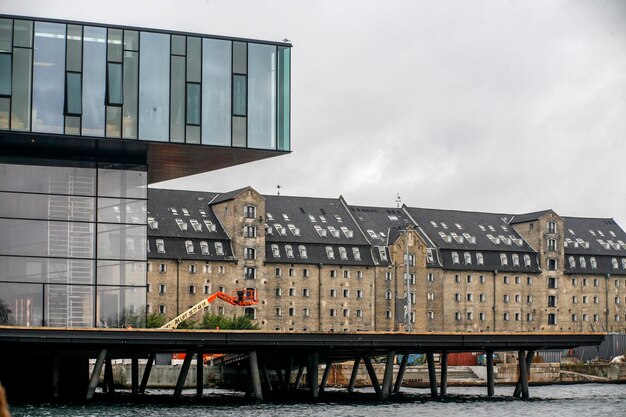
modern Swedish architecture

The risk for the uninitiated is a misunderstanding of the "Friday Silence." To a newcomer, it may look like a three-day weekend. In reality, it is often a day of "asynchronous availability." Many Swedish tech firms have adopted a "4+1" model: four days of intense, collaborative output and one day of "deep-learning" or professional development, often powered by AI-led training modules. If an expat professional spends their Friday entirely offline without prior arrangement, they may find themselves out of sync with a culture that views the extra time as a space for high-level strategic thought, not just rest.

Furthermore, the tax implications of this shift are currently under review by the Swedish Tax Agency (Skatteverket). There is an ongoing debate regarding "fringe benefits" as they relate to AI subscriptions and home-office setups that facilitate this compressed schedule. If a company provides an elite, high-cost AI suite for home use to ensure the 32-hour week is viable, regulators are questioning whether this constitutes a taxable benefit. For the expat on a skilled worker visa, these nuances matter—incorrectly reported benefits can complicate residency renewals.

The Swedish tech sector in 2026 is a laboratory for the future of professional labor. It is a world where the "lagom" (just enough) philosophy has been applied to the clock itself. Success in this environment does not come from staying late to show commitment; it comes from demonstrating that you have mastered the tools to make your presence unnecessary on a Friday morning. To arrive in Stockholm expecting a leisurely pace is a mistake. The four-day week is not a gift; it is a high-stakes trade-off for unprecedented efficiency.

Recalibrate your expectations: the 32-hour week in a Swedish tech firm is a performance, not a vacation. If you cannot automate your routine by at least 30%, you will find the four-day schedule a source of stress rather than liberation. The goal is to be invisible on Fridays because your output was undeniable by Thursday.

Subscribe to Our Newsletter

Welcome to our newsletter hub, where we bring you the latest happenings, exclusive content, and behind-the-scenes insights.

*Your information will never be shared with third parties, and you can unsubscribe from our updates at any time.

Comments

0/2000