
Public Transport Etiquette: Unspoken Rules from Berlin to Tokyo
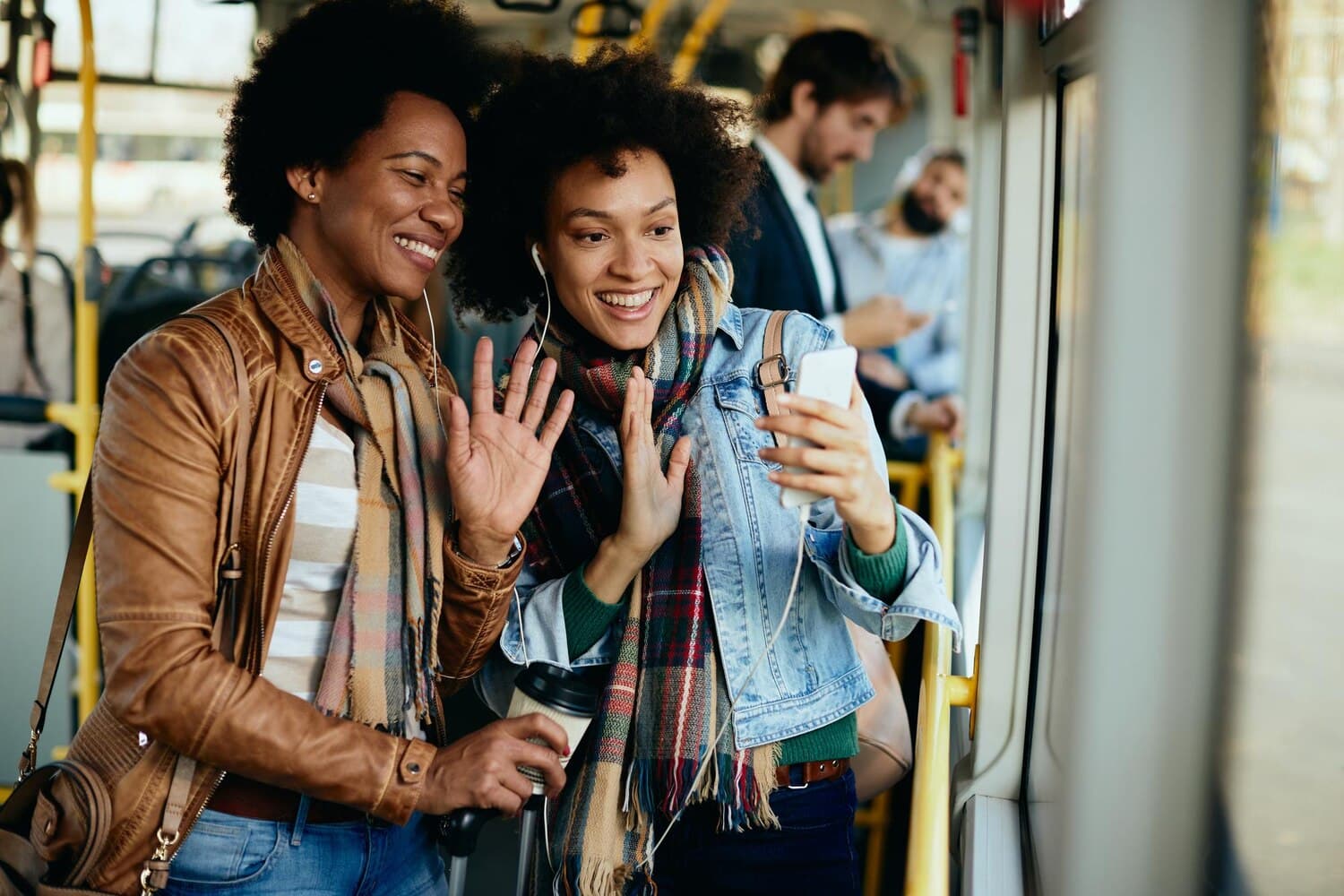
Public Transport Etiquette: Unspoken Rules from Berlin to Tokyo
Public transportation is more than just a logistical network of steel and electricity; it is a profound sociological experiment. Every day, millions of individuals from diverse backgrounds are compressed into confined spaces—trains, buses, and trams—where they must navigate complex social interactions without speaking a word. These interactions are governed by "unspoken rules" or informal social norms that vary drastically from one metropolis to another.
Understanding these norms is crucial for global mobility, social cohesion, and psychological well-being. This article explores the cultural, psychological, and logistical frameworks of public transport etiquette, focusing on two extremes of the spectrum—Berlin and Tokyo—while incorporating data and research from London, New York, and Singapore.
1. The Sociology of Transit: Why Etiquette Matters
Public transport represents what sociologists call a "third space"—a transitional environment between home (first space) and work (second space). Because these spaces are shared by strangers, humans have developed specific behaviors to maintain order and minimize conflict.
The Concept of Civil Inattention
The sociologist Erving Goffman introduced the concept of "Civil Inattention." This is the process by which individuals in public spaces acknowledge each other’s presence without being intrusive. In the context of a crowded subway, civil inattention is the "polite ignoring" of others to preserve their privacy in a space where physical privacy is impossible.
Proxemics: The Science of Personal Space
Edward T. Hall, an anthropologist, coined the term "Proxemics" to describe the study of human use of space. Public transport often forces people into the "Intimate Zone" (0–18 inches), which is usually reserved for close friends and family. Etiquette serves as a psychological buffer to mitigate the stress caused by this physical intrusion.
| Zone | Distance | Context in Public Transit |
|---|---|---|
| Intimate | 0 - 1.5 ft | Forced contact in peak-hour Tokyo/NYC trains. |
| Personal | 1.5 - 4 ft | Standing next to someone on a platform. |
| Social | 4 - 12 ft | Sitting in an uncrowded carriage. |
| Public | 12+ ft | Entering a large station concourse. |
2. Tokyo: The Gold Standard of Collective Silence
Tokyo’s transit system (the Tokyo Metro and JR East) is globally renowned for its punctuality and efficiency. However, the true marvel lies in the behavior of its passengers. In Japan, etiquette is driven by the concept of Meiwaku (annoyance or trouble caused to others).
The Rule of Absolute Silence
In Tokyo, the most significant unspoken (and often spoken via signage) rule is the prohibition of phone calls. While texting is encouraged, speaking on a mobile phone is considered a major social transgression.
- Research Insight: According to a 2024 survey by the Japan Private Railway Association, "noisy conversation and improper behavior" consistently rank as the top grievances among passengers.
- Manner Posters: Tokyo Metro is famous for its "Manner Posters," which use humor and art to educate passengers on keeping their backpacks in front and keeping volume low.
Queueing and Boarding
The boarding process in Tokyo is a choreographed dance. Passengers line up precisely behind floor markings. There is a strict "let them off first" policy. In 2025, AI-integrated sensors in stations like Shinjuku help manage flow, but the human adherence to the queue remains the primary driver of speed.
The "Priority Seat" Paradox
While many Western cultures offer seats to the elderly as a sign of respect, in Tokyo, some elderly passengers may decline a seat to avoid being seen as a "burden" or to avoid making the offerer feel obligated. However, the unspoken rule remains: do not use priority seats unless necessary, and if you do, be prepared to surrender them instantly.
3. Berlin: Directness and Personal Responsibility
Berlin’s public transport system (BVG) reflects the city’s culture: egalitarian, direct, and focused on Eigenverantwortung (personal responsibility).
The Honor System (No Turnstiles)
Unlike London or New York, Berlin’s U-Bahn and S-Bahn stations have no turnstiles. This is based on trust. However, "Schwarzfahren" (fare dodging) is taken seriously. Plainclothes ticket inspectors are common.
- The Etiquette: If an inspector shouts "Fahrausweise, bitte!" (Tickets, please!), the unspoken rule is immediate compliance. Arguing is considered socially unacceptable and futile.
"The Glare" (Der Blick)
Berliners value efficiency. If you stand on the left side of an escalator or block a doorway, you will likely receive a sharp "Entschuldigung!" (Excuse me!) or "the glare." In Berlin, etiquette isn't about politeness in the traditional sense; it’s about not impeding the flow of others.
Bicycles and Dogs
Berlin is highly unique in its integration of pets and bikes. Dogs are allowed on trains (often requiring a small ticket and a muzzle) and must sit under the seat.
- The Rule: Cyclists must use designated "Fahrradabteil" (bicycle compartments). Bringing a bike into a crowded rush-hour train is one of the few ways to truly anger a Berlin commuter.
4. London and New York: The Negotiation of Space
The London Underground (The Tube) and the New York City Subway represent the "Western Metropolitan" model, where etiquette is a constant negotiation between high density and individual rights.
London: The Law of the Escalator
In London, the rule of "Stand on the right, walk on the left" on escalators is followed with religious fervor.
- Data Point: Transport for London (TfL) conducted a study at Holborn station and found that if everyone stood on both sides of long escalators, throughput increased by roughly 30%. Despite the data, Londoners rejected the change because it violated the "unspoken rule" of allowing walkers their lane.
New York: The "Showtime" and Space Strategy
NYC transit etiquette is defined by "The Hustle."
- The Pole Lean: A major faux pas in NYC is "pole-hogging"—leaning your entire body against a pole so others cannot hold it.
- Eye Contact: Research into NYC transit behavior suggests that commuters use "focused avoidance"—looking at ads, books, or phones—to maintain a psychological barrier in the "Intimate Zone."
5. Singapore and Seoul: Technology and Regulation
In Southeast and East Asia, etiquette is often reinforced by strict regulation and high-tech monitoring.
Singapore: The "Fine" City
Singapore’s MRT is incredibly clean due to strict rules against eating, drinking, or carrying flammable goods (and the famous ban on Durian fruit).
- Social Engineering: The Land Transport Authority (LTA) uses "Stand-Up Stacey" and "Move-In Martin"—cartoon characters that remind people to be considerate. This "nudge theory" approach has been highly successful in maintaining order.
Seoul: The Respect for Seniority
In the Seoul Metropolitan Subway, the priority seats at the ends of carriages are often left vacant even in a packed train. Unlike in the West, where a young person might sit until an elderly person boards, in Seoul, these seats are culturally reserved 24/7 for the elderly, disabled, or pregnant. Sitting in one as a healthy young person can result in public reprimand.
6. Comparative Analysis: Global Etiquette Standards (2025)
The following table summarizes the key behavioral expectations across major transit hubs.
| Feature | Tokyo | Berlin | London | New York | Singapore |
|---|---|---|---|---|---|
| Noise Level | Silent | Moderate | Moderate | High | Low |
| Phone Calls | Strictly Forbidden | Discouraged | Accepted (Quietly) | Common | Discouraged |
| Eating/Drinking | Taboo | Common (Döner/Beer) | Common (Coffee) | Common | Strictly Prohibited |
| Escalator Rule | Left (Kanto) / Right (Kansai) | Right | Right | Right | Left |
| Personal Space | High Respect | Moderate | Moderate | Low (Negotiated) | High Respect |
| Eye Contact | Avoided | Minimal | Avoided | Avoided | Minimal |
7. Universal Unspoken Rules: The 2025 Standard
Regardless of the city, certain behaviors have become universal "best practices" in the post-pandemic, tech-saturated world of 2025.
1. Digital Hygiene (The Headphone Rule)
With the advent of high-quality noise-canceling headphones, the "audio leak" has become a modern nuisance.
- The Rule: If someone else can hear your music or the audio from your TikTok feed, you are violating the social contract. 2025 transit etiquette demands that personal entertainment remain strictly personal.
2. The "Backpack Frontal"
In crowded carriages, a backpack worn on the back takes up the space of half a person and can hit others when the wearer turns.
- The Rule: Take off your bag and hold it by your feet or wear it on your chest. This is now standard practice from Paris to Beijing.
3. The Doorway Clearance
The area around the doors is the "high-traffic zone."
- The Rule: If you are not getting off at the next stop but are standing by the door, you must step onto the platform to allow others to exit, then step back in. This is known as the "Step-Out Maneuver."
8. Research Insights: The Impact of Etiquette on Mental Health
Recent studies in Urban Psychology (2024) have shown a direct correlation between transit etiquette and commuter stress levels.
- Predictability and Stress: A study published in the Journal of Environmental Psychology found that the primary cause of "Commuter Stress Syndrome" is not just delays, but the unpredictability of other people's behavior. When social norms (like queueing) are followed, cortisol levels in passengers remain significantly lower.
- The "Tragedy of the Commons": Public transport is a classic "Common-pool resource." If one person takes up two seats (manspreading or bag-parking), they gain comfort at the expense of the collective. Over time, this erosion of etiquette leads to "Transit Fatigue," causing people to switch to private vehicles, which increases urban congestion and carbon emissions.
9. Common Misconceptions and Cultural Clashes
Misconception: "Berliners are rude."
- The Reality: Berlin etiquette is based on clarity. A Berliner telling you to move is not being mean; they are maintaining the efficiency of the system. This "Low-Context" communication style contrasts with the "High-Context" style of Tokyo, where a look or a slight shift in body language is used to convey the same message.
Misconception: "Japanese silence is due to shyness."
- The Reality: It is a form of "Negative Politeness"—the desire to not be impeded and to not impede others. It is an active form of respect for the shared environment.
Misconception: "Eating on the train is okay if it doesn't smell."
- The Reality: In many cultures (Singapore, Japan), the act of eating itself is seen as a violation of the "clean space." Even "odorless" food is often frowned upon because it risks spills and attracts pests.
10. Advanced Topics: The Future of Transit Etiquette
As we move further into the 2020s, new challenges are emerging that will redefine unspoken rules.
E-Scooters and Foldable Mobility
The rise of "last-mile" transport (e-scooters, folding bikes) has created friction. New etiquette requires these devices to be folded and stored under seats to avoid tripping hazards. Many systems, like London’s, have banned e-scooters entirely due to battery fire risks, making "compliance with safety bans" a new ethical rule.
The Post-Pandemic "Mask Norm"
While mandates have largely vanished, in cities like Tokyo and Seoul, wearing a mask when you have a minor cold is now an iron-clad unspoken rule. In Berlin or NYC, this is seen as a personal choice, but the "cough into your elbow" rule has become much more strictly enforced by social "glaring."
Neurodiversity and Public Space
Modern transit design is beginning to account for neurodivergent passengers who may find the sensory input of public transport overwhelming. "Quiet Carriages" (common on German ICE trains and some UK networks) are expanding. The new etiquette involves recognizing that someone may be wearing "Sunflower Lanyards" (indicating a non-visible disability) and offering them extra space or patience.
Summary and Key Takeaways
Public transport etiquette is a vital component of urban life. It is the "social grease" that allows millions of people to coexist in cramped conditions.
Key Takeaways:
- Tokyo prioritizes collective silence and the avoidance of Meiwaku (annoyance).
- Berlin values efficiency, personal responsibility, and direct communication.
- London/NYC focus on the "stand right, walk left" rule and the negotiation of personal space through civil inattention.
- Universal Rules for 2025: Always use headphones, move your backpack to the front, and never block the doors.
- Psychological Impact: Adhering to unspoken rules reduces cortisol levels and improves the overall efficiency of the city.
By mastering these unspoken rules, a traveler or commuter does more than just avoid a fine or a dirty look; they contribute to the "Social Harmony" of the city they are in.