
Raising 'Global Citizens': Values to Teach Your Children
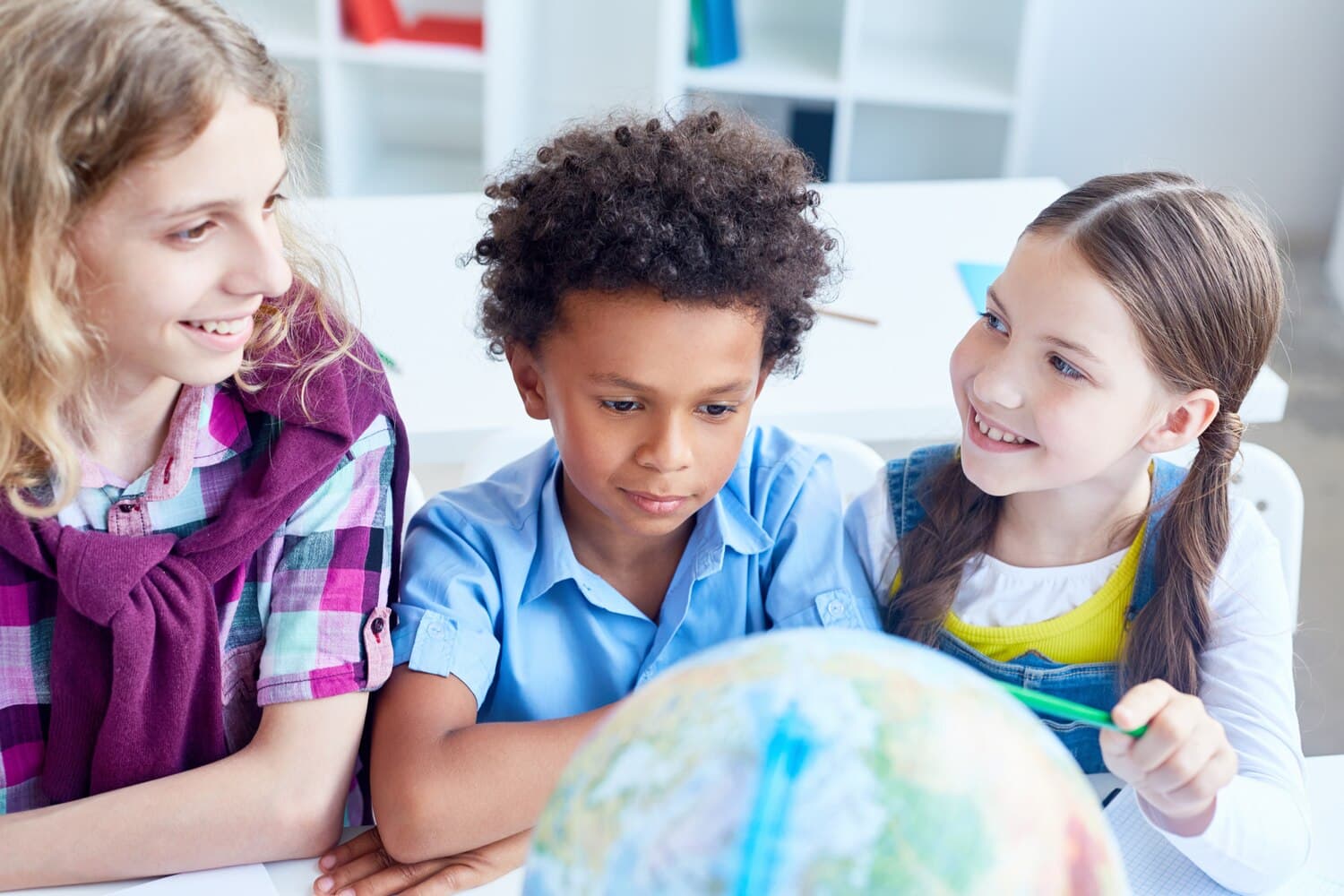
The concept of "Global Citizenship" has evolved from a niche pedagogical theory into a fundamental necessity for the 21st century. As of 2025, the world is more interconnected than ever, driven by digital transformation, global economic shifts, and shared environmental challenges. For parents and educators, raising a "Global Citizen" is no longer about teaching a child to be a tourist; it is about equipping them with the cognitive, emotional, and ethical tools to thrive in a diverse, complex, and rapidly changing world.
According to UNESCO, Global Citizenship Education (GCED) aims to empower learners of all ages to assume active roles, both locally and globally, in building more peaceful, tolerant, inclusive, and secure societies. This article provides an in-depth, research-based exploration of the core values essential for raising global citizens, backed by the latest data in developmental psychology and international education.
1. Defining Global Citizenship in the 2020s
To teach global citizenship, we must first define it. It is not a legal status but a mindset—a way of living that recognizes our impact on the world and the world’s impact on us.
The Three Pillars of Global Citizenship (UNESCO Framework)
Research by UNESCO identifies three domains of learning that constitute the foundation of global citizenship:
- The Cognitive Domain: Knowledge and thinking skills necessary to better understand the world and its complexities. This includes understanding global issues (poverty, climate change) and the interconnectedness of countries.
- The Socio-Emotional Domain: Values, attitudes, and social skills that enable learners to live together with others respectfully and peacefully. This focuses on empathy, solidarity, and respect for difference.
- The Behavioral Domain: Conduct, performance, and practical application. It involves taking action at local, national, and global levels for a more sustainable and just world.
The Economic and Social Rationale
By 2025, the World Economic Forum (WEF) identifies "Cross-cultural Competency" and "Social Intelligence" as top-tier skills for the future workforce. As AI automates routine tasks, the ability to navigate human complexity across borders becomes a child’s greatest competitive advantage.
2. Core Value: Empathy and Perspective-Taking
Empathy is the bedrock of global citizenship. In a global context, this goes beyond "being nice." It involves cognitive empathy—the ability to understand another person’s perspective without necessarily sharing their culture or circumstances.
The Science of Empathy
Developmental psychologists, such as those at the Greater Good Science Center (UC Berkeley), suggest that empathy is both innate and learned. Between the ages of 2 and 7, children develop "Theory of Mind," the realization that others have thoughts and feelings different from their own.
How to Cultivate Global Empathy:
- Diverse Narratives: Exposure to "windows and mirrors"—books where children see themselves (mirrors) and books where they see into the lives of others (windows). Research shows that reading literary fiction improves a child's ability to track others' mental states.
- The "Vulnerability" Discussion: Teaching children that despite cultural differences, basic human needs (safety, love, belonging) are universal.
- Avoid "Othering": Use language that emphasizes commonality. Instead of saying "Those people live in huts," say "This is how families in this climate build their homes to stay cool."
3. Core Value: Cultural Intelligence (CQ)
While IQ measures intelligence and EQ measures emotional intelligence, CQ (Cultural Intelligence) measures the ability to function effectively in culturally diverse situations. According to Dr. David Livermore, a leading researcher on the topic, CQ consists of four capabilities:
| CQ Component | Definition | Practical Application for Children |
|---|---|---|
| CQ Drive | Interest and confidence in functioning in diverse settings. | Encouraging curiosity about new foods or traditions. |
| CQ Knowledge | Understanding of how cultures are similar and different. | Learning about different world religions or social norms. |
| CQ Strategy | Making sense of culturally diverse experiences. | Discussing why a greeting in another country might be different. |
| CQ Action | Adapting behavior when interacting with different cultures. | Learning basic phrases in a new language or practicing local etiquette. |
The Power of Language
Language is the most direct bridge to another culture. Studies by the American Council on the Teaching of Foreign Languages (ACTFL) indicate that bilingual children show greater cognitive flexibility and a more nuanced understanding of cultural contexts. In 2025, learning a language isn't just about vocabulary; it’s about understanding the worldview embedded in that language.
4. Core Value: Environmental Stewardship and Sustainability
A global citizen recognizes that the Earth is a shared resource. With the UN’s Sustainable Development Goals (SDGs) as a roadmap, teaching children about sustainability is an act of global responsibility.
Data on "Climate Anxiety" vs. "Climate Agency"
A landmark 2021 study published in The Lancet found that 59% of children and young people were very or extremely worried about climate change. To counter this, global citizenship education shifts the focus from "fear" to "agency."
Teaching Sustainability as a Global Value:
- Systems Thinking: Help children see the lifecycle of products. (e.g., "Where did this plastic toy come from, and where will it go when we're done?")
- Local-Global Connection: Explain how local actions (recycling, water conservation) contribute to the health of the global oceans and atmosphere.
- Respect for Nature: Research indicates that children who spend time in nature are more likely to protect it as adults. This is known as "Significant Life Experiences" (SLE) research in environmental education.
5. Core Value: Digital Citizenship and Media Literacy
In 2025, a child’s "world" is often digital. Being a global citizen means navigating the internet with integrity and skepticism.
Sifting Fact from Fiction
With the rise of generative AI and deepfakes, critical thinking is the primary defense of a global citizen. Children must be taught to:
- Verify Sources: Understand the difference between a peer-reviewed article, a news report, and an opinion piece.
- Recognize Bias: Understand that every media creator has a perspective.
- Digital Etiquette: Understand that the person on the other side of a screen is a human being with rights and feelings.
Global Connectivity
The internet allows a child in London to play a game with a child in Tokyo. This is a "micro-moment" of global citizenship. Parents should encourage these interactions while providing the safety framework to handle them responsibly.
6. Core Value: Social Justice and Human Rights
Raising a global citizen involves instilling a sense of fairness and a willingness to stand up against inequality. This is rooted in the Universal Declaration of Human Rights.
Teaching Equity vs. Equality
A global citizen understands that "treating everyone the same" (equality) isn't always enough; sometimes people need different things to achieve the same outcome (equity).
Practical Steps for Parents:
- Discuss Global News: Don’t shield children from global issues like poverty or migration; instead, discuss them in age-appropriate ways. Use the "What is fair?" framework.
- Service Learning: Move beyond "charity" (giving from a position of superiority) to "solidarity" (working with others to solve shared problems).
- Identify Stereotypes: Actively point out stereotypes in movies and advertisements. Research from the Geena Davis Institute on Gender in Media shows that media representation significantly impacts how children view the roles of different groups in society.
7. Developmental Stages: How to Teach Global Values
The approach to global citizenship must be tailored to a child's developmental stage.
Early Childhood (Ages 0–5)
- Focus: Sensory exposure and basic empathy.
- Activities: Listening to music from different countries, trying diverse cuisines, and reading picture books with diverse characters.
- Goal: Normalize diversity.
Middle Childhood (Ages 6–12)
- Focus: Curiosity and facts.
- Activities: Map games, learning a second language, participating in "pen-pal" programs (digital or physical), and engaging in local community service.
- Goal: Understand the "How" and "Why" of different cultures.
Adolescence (Ages 13–18)
- Focus: Critical thinking and active citizenship.
- Activities: Debating global issues, internships with NGOs, international exchange programs, and leading environmental or social initiatives at school.
- Goal: Develop a personal identity as a global changemaker.
8. The Role of the "Global Home" Environment
Education begins at home. Research into "The Hidden Curriculum"—the unstated lessons children learn from their environment—suggests that a parent’s behavior is more influential than their words.
Strategies for a "Global Home":
- The "Global Plate": Food is the easiest entry point to culture. Use mealtime to discuss the origin of ingredients and the traditions of the culture that created the dish.
- Celebrate Diverse Holidays: Don’t just celebrate your own traditions. Learn about Lunar New Year, Diwali, Eid, or Hanukkah.
- Travel with Purpose: When traveling, focus on local experiences rather than "resort bubbles." Use local transport, eat at local markets, and learn basic greetings.
- The "News Minute": Once a week, discuss one positive story and one challenging story from a different continent.
9. Critical Perspectives: Is Global Citizenship Anti-Patriotic?
A common misconception is that global citizenship undermines national identity. However, research in Political Psychology suggests the opposite.
The "Concentric Circles" of Identity
The philosopher Martha Nussbaum argues that we should view our identity as a series of concentric circles:
- Center: The Self.
- First Circle: Family.
- Second Circle: Community/City.
- Third Circle: Nation.
- Outer Circle: Humanity.
Being a global citizen does not mean abandoning the "Nation" circle; it means recognizing that the "Humanity" circle exists and carries moral weight. Studies show that children with a strong, healthy sense of their own cultural identity are actually more open to other cultures, as they feel secure in their own roots.
10. Advanced Topic: The Impact of AI on Global Citizenship
As we look toward the late 2020s, AI will play a massive role in how children experience the world.
- Real-time Translation: AI-powered earbuds can now translate 40+ languages in real-time. While this removes the "barrier" of language, it does not remove the "barrier" of culture. A global citizen uses technology to enhance human connection, not replace the effort of learning about others.
- Virtual Reality (VR) Empathy: "Empathy Machines"—VR experiences that allow children to walk through a refugee camp or a rainforest—are being used in schools. Research from Stanford University’s Virtual Human Interaction Lab suggests these experiences can increase pro-social behavior and long-term empathy.
11. Common Misconceptions in Global Parenting
| Misconception | The Reality |
|---|---|
| "Global citizenship is only for the wealthy." | Global citizenship is a mindset, not a travel itinerary. It can be taught through the library, the internet, and local community diversity. |
| "Children are too young to hear about world problems." | While details should be age-appropriate, children are aware of the world. Avoiding topics can lead to "learned helplessness" or fear. |
| "Being a global citizen means being 'colorblind'." | "Colorblindness" ignores the unique experiences and challenges of different groups. Global citizenship emphasizes celebrating differences, not ignoring them. |
12. Summary and Key Takeaways
Raising a global citizen is a long-term commitment to fostering curiosity, empathy, and responsibility. In 2025, this is the most valuable education a child can receive, preparing them for a world where boundaries—physical, digital, and cultural—are increasingly fluid.
Key Takeaways for Parents and Educators:
- Start with Empathy: Use stories and daily interactions to build the "empathy muscle."
- Cultivate CQ: Treat cultural intelligence as a skill as important as math or literacy.
- Connect Locally and Globally: Help children see how their local actions impact the global system.
- Embrace Critical Thinking: Give them the tools to navigate a complex digital information landscape.
- Model the Behavior: Be a global citizen yourself. Show curiosity, respect diversity, and take action for the planet.
By instilling these values, we prepare children not just to live in the world, but to lead it toward a more sustainable and equitable future.