
Packing for Two Climates: Strategies for Variable Weather
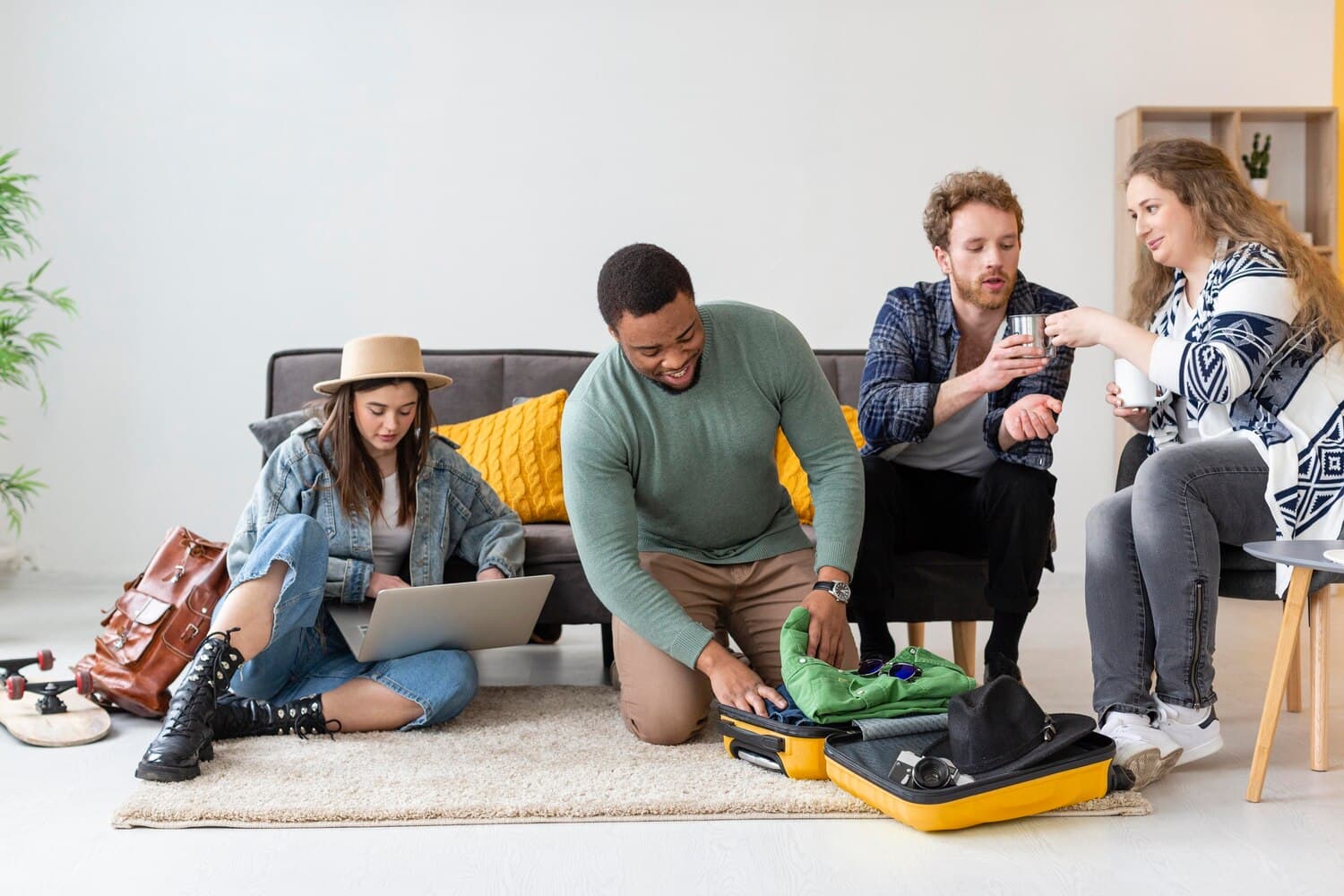
The logistical challenge of traveling between disparate climates—such as departing a frigid northern winter for a tropical equatorial summer—presents one of the most complex puzzles in modern travel. Historically, travelers were forced to choose between overpacking (leading to physical strain and excessive baggage fees) or under-preparing (resulting in discomfort or the need for emergency local purchases).
As we move into 2025, advancements in textile technology, a deeper understanding of human thermoregulation, and more stringent airline regulations have transformed how we approach this challenge. Packing for variable weather is no longer just about "bringing a jacket"; it is a strategic exercise in material science, modular design, and spatial optimization.
This guide provides a research-based framework for mastering the "bi-climatic" packing strategy, ensuring you remain comfortable, stylish, and agile, regardless of the temperature swing.
1. The Science of Thermoregulation and the "Clo" Value
To pack effectively, one must understand how clothing manages body heat. In the textile industry, the Clo value is the standard unit used to measure the thermal insulation provided by garments. One Clo is defined as the amount of insulation required to keep a resting person warm in an indoor room at 21°C (70°F).
Understanding the Physics of Warmth
Heat loss occurs through four primary mechanisms:
- Conduction: Direct contact with cold surfaces.
- Convection: Air movement stripping heat from the body.
- Radiation: Heat moving away from the body into the environment.
- Evaporation: Sweat turning to vapor (which cools the skin).
When packing for two climates, your gear must address these differently. In a tropical climate, you prioritize evaporation (moisture-wicking). In a cold climate, you prioritize convection and radiation management (insulation and windproofing).
2. The Foundation: The Three-Layer Modular System
The most efficient way to pack for two climates is to utilize a modular layering system. This allows you to add or subtract "modules" as you transition through different weather zones.
Phase I: The Base Layer (Moisture Management)
The base layer is the most critical for both climates. In the heat, it must wick sweat away to facilitate evaporative cooling. In the cold, it must keep the skin dry to prevent conductive heat loss.
- Materials to Choose:
- Merino Wool (120–150 GSM): Naturally antimicrobial (resists odors for days), highly breathable, and thermally regulated.
- Synthetic Micro-Polyesters: Fast-drying but prone to odors.
- What to Avoid: Heavy cotton. Cotton is hydrophilic; it absorbs up to 27 times its weight in water, which can lead to chafing in heat and hypothermia in cold.
Phase II: The Mid-Layer (Insulation)
The mid-layer's job is to trap "dead air" warmed by your body. For a bi-climatic trip, this layer must be highly compressible.
- The "Puffer" Strategy: A high-fill power down jacket (800+ fill) or a premium synthetic equivalent (like PrimaLoft Gold) offers the best warmth-to-weight ratio. These can often compress into a small pouch the size of a water bottle.
- The Technical Fleece: Fleece is excellent for active movement but takes up more volume than down.
Phase III: The Shell (Weather Protection)
The shell protects against wind and rain. For variable weather, a "3-layer" waterproof-breathable membrane (like Gore-Tex Pro or eVent) is the gold standard.
| Layer Type | Cold Climate Function | Warm Climate Function |
|---|---|---|
| Base | Traps initial heat, keeps skin dry. | Wicks sweat, prevents UV exposure. |
| Mid | Traps air for insulation. | Usually stored in luggage. |
| Shell | Blocks wind/snow/convection. | Blocks tropical downpours. |
3. Material Science: Fabric Selection for 2025
Recent innovations in "smart" fabrics have made bi-climatic packing significantly easier. When selecting items, look for these specific technical properties:
The Rise of Graphene
Graphene-infused fabrics are becoming mainstream in 2025. Graphene is an excellent thermal conductor. In the heat, it helps dissipate body heat; in the cold, it helps distribute heat evenly across the garment, eliminating "cold spots."
Merino Wool vs. Tencel (Lyocell)
While Merino is the king of travel fabrics, Tencel (made from wood pulp) is gaining ground for tropical segments. Tencel is more absorbent than cotton and has a cooling sensation on the skin, making it an ideal "hot climate" specific item that still layers well under a sweater.
Grams per Square Meter (GSM)
Pay attention to fabric weight. For a two-climate trip, you want a "split-weight" strategy:
- Lightweight (120-150 GSM): For your tropical days.
- Midweight (200-250 GSM): For your cold-weather base layers.
4. Strategic Wardrobe Architecture: The "Interlocking" Method
Instead of packing two separate wardrobes, you must create one cohesive system where almost every item serves both environments. This is often called the 5-4-3-2-1 Rule, modified for variable weather.
The Bi-Climatic Capsule Wardrobe (Example for 14 Days)
- 5 Tops: 3 lightweight Merino tees (for both climates), 1 linen shirt (tropical), 1 long-sleeve thermal (cold).
- 4 Bottoms: 1 pair of technical chinos (water-resistant), 1 pair of lightweight linen trousers, 1 pair of shorts (doubles as swimwear), 1 pair of thermal leggings (to wear under chinos).
- 3 Outer Layers: 1 packable down jacket, 1 rain shell, 1 lightweight cardigan or "shacket."
- 2 Shoes: 1 pair of waterproof Chelsea boots or trail runners (wear these on the plane), 1 pair of high-quality packable sandals.
- 1 Accessory Set: A wide-brimmed hat (sun) and a cashmere scarf (warmth/style).
The "Color Palette" Strategy
To maximize versatility, stick to a neutral palette (navy, charcoal, olive, black). This allows you to layer any item over any other item without visual clashing, which is vital when you are forced to wear multiple layers for warmth.
5. Footwear: The Heaviest Variable
Footwear is the biggest consumer of luggage volume. Research from travel logistics firms shows that shoes account for nearly 30% of total luggage weight on average.
The "Wear One, Pack One" Rule
- Wear your "Heavy" Shoes: Even if you are flying into a 30°C (86°F) environment, wear your boots or heavy sneakers on the plane. This saves significant space and weight.
- Pack "Flat" Shoes: Pack sandals, espadrilles, or collapsible "barefoot" style shoes. These can be compressed to a thickness of less than 2cm.
Advanced Tip: Footwear Versatility
Look for "Hybrid" footwear. Brands in 2025 are producing shoes that look like leather office shoes but feature Vibram soles and Gore-Tex lining. These can handle a snowy street in Zurich and a rainy afternoon in Singapore without needing a second pair of specialized shoes.
6. Advanced Packing Techniques: Volume vs. Weight
When packing for two climates, you face two distinct enemies: Volume (puffy winter gear) and Weight (heavy denim or leather).
Compression Cubes vs. Vacuum Bags
- Compression Cubes: Ideal for most travelers. They use a secondary zipper to compress air out of the clothing. These are best for organizing by climate (e.g., "The Cold Cube" and "The Heat Cube").
- Vacuum Bags: Only recommended for extremely bulky items like heavy down parkas. Warning: They do not reduce weight, only volume. Over-reliance on vacuum bags often leads to exceeding airline weight limits.
The "Bundle Wrapping" Method
Research suggests that bundle wrapping—wrapping clothes around a central "core" of soft items—minimizes wrinkles and utilizes space more efficiently than folding or rolling. For bi-climatic travel, place your tropical, thin items in the center core and wrap your heavier cold-weather items around them.
7. Logistics and Tech: 2025 Airline Trends
The "Carry-on Only" movement has faced challenges in 2025 as airlines implement stricter AI-driven size and weight checks at gates.
2025 Weight Constraints
Many international carriers now strictly enforce a 7kg (15lb) to 10kg (22lb) limit for cabin baggage. When packing for two climates, hitting this limit is difficult.
The "Wear Your Weight" Strategy: If you are over the limit, use your heavy climate gear as "wearable luggage."
- Multi-pocket jackets: Jackets from brands like SCOTTeVEST can hold electronics, chargers, and even toiletries.
- The "Scarf" Hack: A heavy scarf can serve as a blanket on the plane and doesn't count toward baggage weight.
Using Technology for Real-Time Adjustment
Utilize apps like PackPoint or WeatherSpark. WeatherSpark is particularly useful for bi-climatic trips because it provides "typical" weather data (humidity, wind speed, precipitation probability) rather than just a 5-day forecast, allowing for better "worst-case scenario" planning.
8. Transition Management: The Airport Experience
The most uncomfortable part of bi-climatic travel is the transition. Sitting in a heated airport in a heavy sweater, or stepping off a plane into a blizzard in shorts, can be avoided.
The "Transition Kit"
Keep a small, accessible "Transition Kit" in your personal item (the bag under the seat):
- For Heat to Cold: A beanie, a pair of lightweight gloves, and wool socks.
- For Cold to Heat: A pair of linen shorts and a t-shirt.
Pro Tip: Use the airport lounge or a large restroom cubicle before you exit the secure area to change into your "destination" outfit. This prevents the shock of exiting the terminal into an environment you aren't dressed for.
9. Common Misconceptions in Variable Weather Packing
Misconception 1: "I need a dedicated coat for the cold part of my trip."
Reality: You need a shell and an insulator. A dedicated "winter coat" is a single-use item that is useless in the tropics. A rain shell combined with a down puffer is more versatile and takes up 60% less space.
Misconception 2: "Denim is a good travel fabric."
Reality: Denim is heavy, takes forever to dry, and provides poor insulation when wet. Technical "travel jeans" (polyester/cotton blends with DWR coating) are superior for bi-climatic trips.
Misconception 3: "Rolling clothes always saves space."
Reality: Rolling is great for t-shirts and small items, but for structured items like blazers or heavy sweaters, "bundle wrapping" or "flat folding" often prevents the "lumpy bag" syndrome that wastes corner space in luggage.
10. Summary and Key Takeaways
Packing for two climates is an exercise in modularity and material efficiency. By focusing on high-performance fabrics like Merino wool and utilizing a three-layer system, you can significantly reduce the volume of your luggage while increasing your comfort levels.
Checklist for Success:
- Analyze the "Clo" value: Ensure you have enough layers to hit a combined insulation level suitable for the coldest expected day.
- The Merino Rule: Use Merino for base layers to minimize laundry and maximize odor resistance.
- Modular Footwear: Wear the heaviest shoes; pack the lightest.
- Spatial Strategy: Use compression cubes to separate the "hot" wardrobe from the "cold" wardrobe.
- Transition Plan: Have your "Arrival Outfit" easily accessible in your personal item bag.
11. Case Study: London (5°C) to Singapore (31°C)
The Challenge: A business traveler needs to go from a drizzly, cold London morning to the humid, sweltering heat of Singapore.
The Solution:
- Departure Outfit (London): Technical chinos, 150 GSM Merino t-shirt, 1/4 zip wool sweater, packable down vest, and a Gore-Tex raincoat. Chelsea boots on feet.
- In-Flight Change: During the flight, the traveler removes the sweater and vest.
- Arrival Outfit (Singapore): The traveler swaps the wool socks for "no-show" cotton socks and removes the raincoat. The Merino t-shirt and technical chinos are breathable enough for the 31°C heat while walking to the taxi.
- Luggage Content: The down vest and sweater are compressed into a single cube, occupying only 2 liters of space.
Key Takeaways
- Materials Matter: Avoid cotton. Prioritize Merino wool, Tencel, and Graphene-infused synthetics.
- Layering is King: Three thin layers are warmer and more versatile than one thick layer.
- Compress, Don't Just Pack: Use compression cubes to manage the volume of cold-weather gear.
- The Airport Transition: Use the "Transition Kit" strategy to avoid physical discomfort during climate shifts.
- Weight vs. Volume: Be aware of airline weight limits (7kg–10kg) and wear your heaviest items during transit.