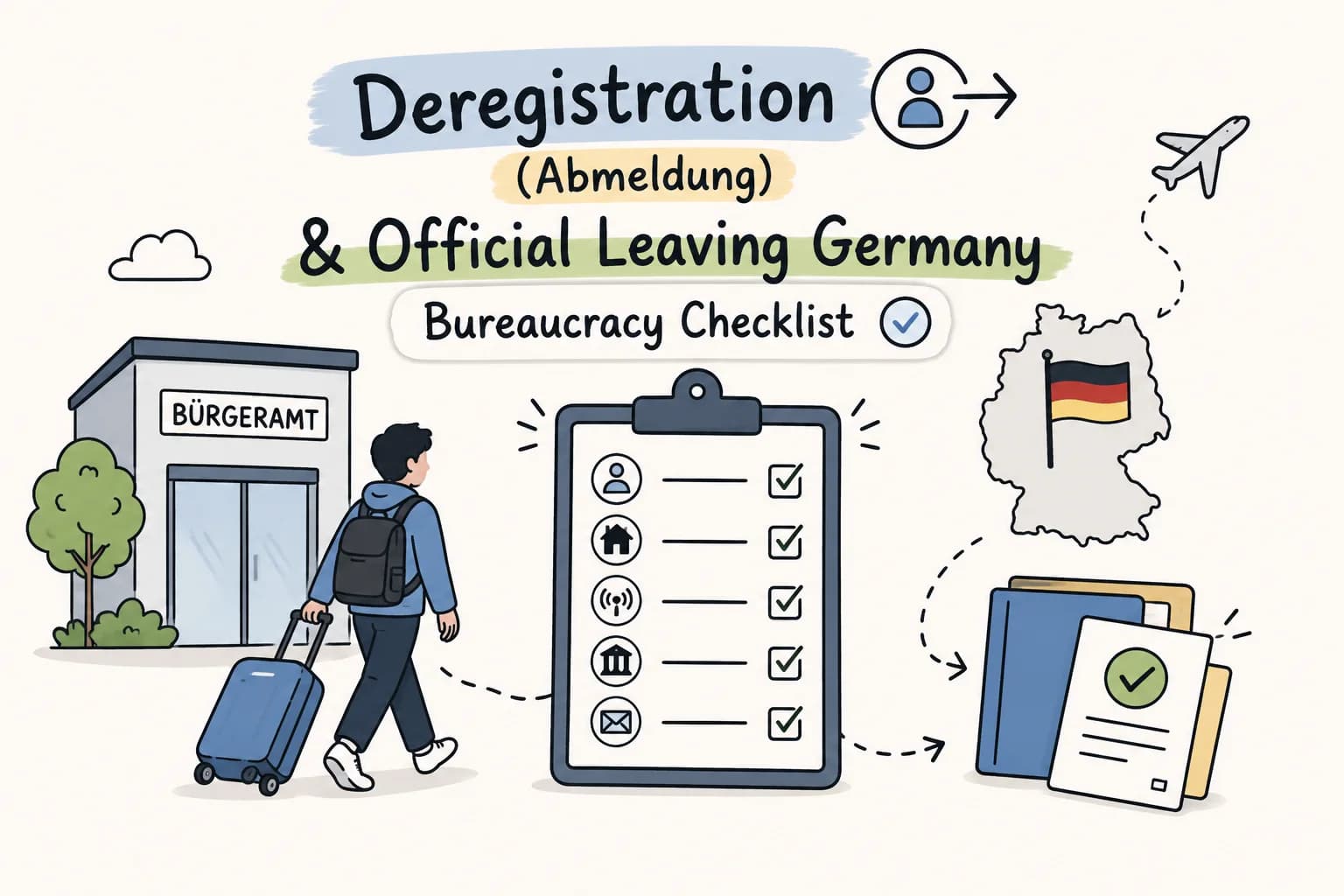
Deregistering your address (Abmeldung) is the official step that tells German authorities you no longer live in the country, and it triggers a chain of cancellations across health insurance, taxes, banking, and contracts. This guide walks through the process step by step, generally, without claiming to cover every regional exception.[1]
What Abmeldung actually is
Abmeldung is the formal notice to your local registration office (Bürgeramt, Bürgerbüro, or Einwohnermeldebehörde, naming varies by city) that you're giving up your registered address in Germany. It's required if you're moving abroad permanently or leaving for an extended period; moving to a new city within Germany doesn't need a separate Abmeldung because your new Anmeldung there handles it automatically. Once processed, you receive an Abmeldebestätigung (deregistration confirmation) — a document that later matters for banks, insurers, tax offices, and even future registrations elsewhere.[2][3][1]
Timing rules
| Rule | General detail |
|---|---|
| Earliest you can deregister | Up to 7 days before your actual moving-out date [1][2] |
| Deadline after moving out | Within 14 days of leaving your address [1] |
| Consequence of missing it | Possible fine, varies by municipality [1] |
| Where to submit | Local Bürgeramt tied to your last registered address [2] |
Some cities (Berlin, Bonn, Stuttgart, and others) allow deregistration by post, e-mail, or online portal, not only in person — so check your specific municipality's options before assuming you need an appointment.[4][2]