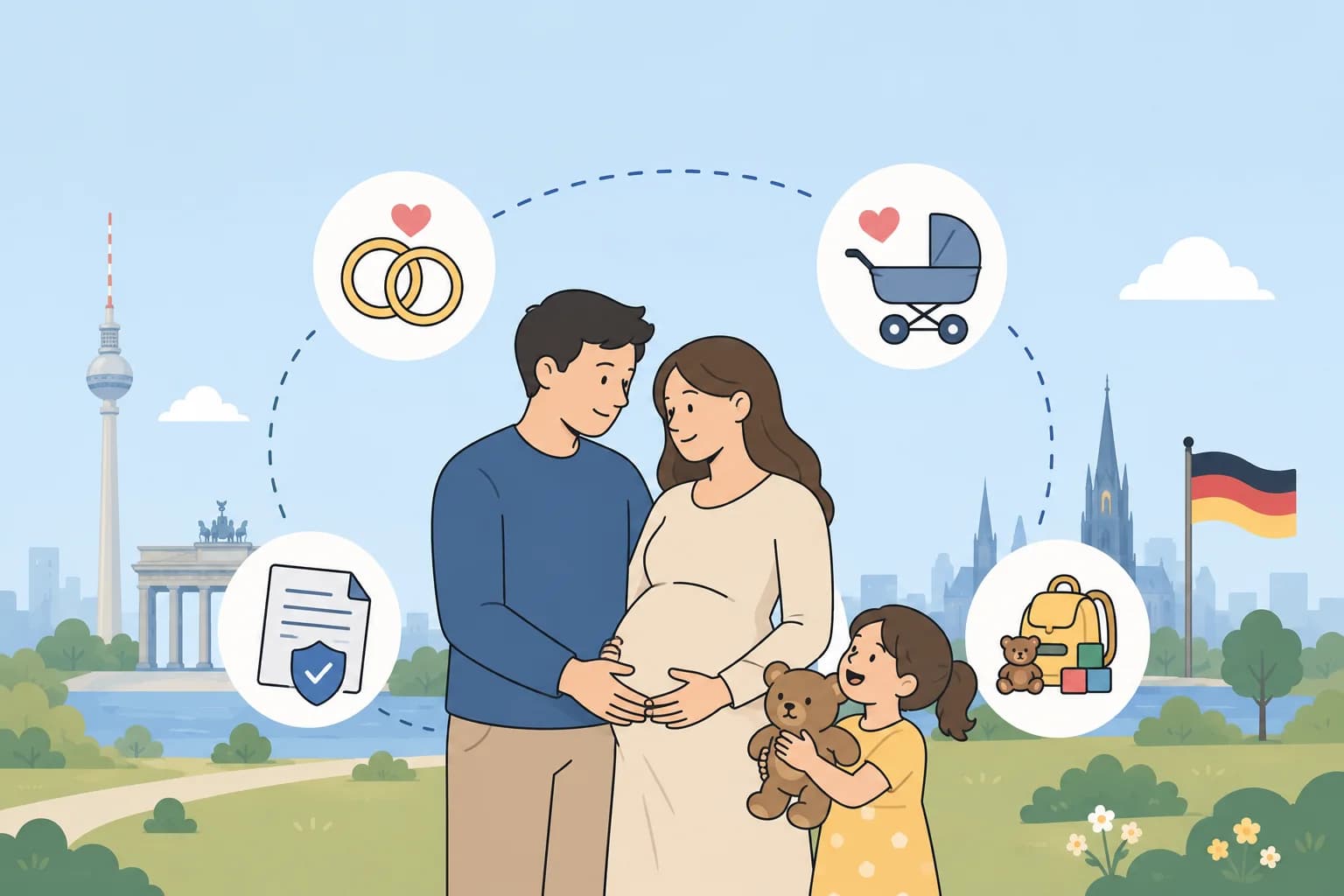
A Guide to Estonian Child Benefits (Peretoetused)

10 min read
Family ParenthoodEstonia
A Guide to Estonian Child Benefits (Peretoetused)
Family Parenthoodestoniaexpatfamily

Moving to a new country with your family is a whirlwind of emotions. There’s the excitement of a new adventure, the endless to-do lists, and, let's be honest, a fair bit of anxiety about making sure your children have the best possible start. When my family and I were considering the move to Estonia, amidst the research into schools and the best places to find a decent playground, we stumbled upon something that truly stood out: the country’s comprehensive system of family support.

It’s one thing to hear that a country is "family-friendly," but it's another to see it written into national policy. In Estonia, this support system is called Peretoetused, or family benefits. It's more than just a bit of financial help; it's a foundational part of the social fabric, designed to give families a strong, secure start. If you’re an expat parent or parent-to-be in Estonia, understanding this system is key to settling in and feeling supported. So, let’s break down exactly what Estonian child benefits look like in 2025, who is eligible, and how you can access them.

What Exactly Are Peretoetused? A Bird's-Eye View

At its core, the Estonian family benefits system is a collection of financial allowances paid by the state to support the raising of children. The goal is to alleviate the financial pressures of parenthood and ensure children's well-being. It's a multi-layered system, not just a single payment, and it adapts as your family grows.

For expats, the most important thing to know is that these benefits are generally available to all legal residents of Estonia, regardless of nationality. If you and your child have a valid residence permit or right of residence and live here, you are typically eligible.

Here’s a quick overview of the main types of benefits we’ll explore:

Benefit Type Description Frequency
Child Allowance (Lapsehooldustasu) A monthly payment for each child to help with general costs. Monthly
Parental Benefit (Vanemahüvitis) An earnings-related benefit that replaces a parent's income during leave. Often called "parental salary." Monthly (during leave)
Benefit for a Large Family (Lasterikka pere toetus) An additional monthly allowance for families raising three or more children. Monthly
One-Off Birth Grant (Sünnitoetus) A one-time payment from the state upon the birth of a child. One-time
Local Government Birth Grant An additional one-time payment from your local city or municipality (e.g., Tallinn, Tartu). One-time

Eligibility for Expats: Do You Qualify?

This is the number one question for any foreigner moving here. The rules are quite clear and hinge on one central concept: residency.

To be eligible for Estonian child benefits, the following conditions must generally be met:

  1. You are a legal resident: You must have a temporary or permanent residence permit or a permanent right of residence in Estonia. Simply being in the country on a short-term D-visa, for example, is not sufficient. This applies to both EU and non-EU citizens.
  2. Your child is a legal resident: The child for whom you are claiming benefits must also be a registered resident of Estonia.
  3. Your family resides in Estonia: You cannot claim these benefits if you are registered here but primarily live in another country. The Social Insurance Board (Sotsiaalkindlustusamet or SKA) does perform checks.

For EU/EEA citizens, obtaining the right of residence is a relatively straightforward process involving registering your address with the local government authority. For non-EU citizens, you will typically be here on a temporary residence permit (TRP) for work, study, or joining a family member. Once that TRP is secured and your address is registered, you are on the path to eligibility.

A Deep Dive into the Key Benefits (The 2025 Numbers)

Let's get into the specifics. The amounts and conditions are set by law and are updated periodically, so these figures reflect the latest information for 2025.

1. Monthly Child Allowance (Lapsehooldustasu)

This is the most universal benefit, paid for every resident child from birth until they turn 16 (or until 19 if they are enrolled in a basic school, upper secondary school, or vocational school).

  • For the first and second child: €80 per month, per child.
  • For the third and subsequent children: €100 per month, per child.

So, a family with three children would receive €80 + €80 + €100 = €260 per month in basic child allowance. This payment is automatic once your child is registered and you've applied for family benefits.

2. Parental Benefit (Vanemahüvitis) - The "Parental Salary"

This is the crown jewel of the Estonian system and a game-changer for new parents. It's designed to allow a parent to stay home with their child without a significant drop in income.

  • How it's calculated: The benefit is based on your average monthly socially-taxed income from the calendar year preceding the start of your leave. If you move to Estonia in mid-2024 and have a child in 2025, your benefit will be calculated based on your 2024 Estonian income.
  • Duration: The total period for parental benefit is a generous 605 days (around 1.5 years). This can be shared between parents. There is a special 30-day period reserved for the other parent that cannot be transferred, encouraging both parents to take leave.
  • The Amount:
    • Standard Rate: 100% of your previous average gross salary.
    • Minimum Rate: If you didn't work in Estonia in the preceding year, you are still entitled to the benefit, but at the "benefit rate," which in 2025 is €725 per month.
    • Maximum Rate: There is a cap. The benefit cannot exceed three times the Estonian average salary from the year before last. For 2025, this cap is €4,733.55 per month.
  • Flexibility: The system is incredibly flexible. You can take the leave all at once, or you can pause it and use it in parts until the child turns three. You can also work while receiving the benefit, though your benefit amount may be reduced if your income exceeds a certain threshold.

Expat Caveat: The link to Estonian social tax is critical. If you are a newly arrived expat with no prior income history in Estonia, you will receive the minimum benefit rate.

3. Benefit for a Large Family (Lasterikka pere toetus)

Estonia provides a significant extra boost for larger families. This benefit underwent changes in recent years, so it's important to know the current 2025 structure. It is paid in addition to the regular monthly child allowance.

  • For families with 3 to 6 children: €450 per month.
  • For families with 7 or more children: €650 per month.

This benefit is paid until the oldest child in the group turns 19 (or 24 if they are a student). A "phase-out" system has been introduced. This means the benefit doesn't just stop cold when your oldest child ages out. Instead, it gradually reduces, providing a smoother financial transition for the family.

Let's illustrate: A family with three children (ages 10, 8, and 5) would receive:

  • Child Allowance: €80 + €80 + €100 = €260
  • Large Family Benefit: €450
  • Total Monthly Support: €710

4. One-Off Birth Grants

When your baby is born, you get a helping hand right away with one-time payments.

  • State Birth Grant: The national government provides a one-time payment of €320 per child. For triplets or more, this increases to €1,000 per child.
  • Local Government Grant: This is a fantastic local perk! Almost every city and municipality offers its own birth grant to registered residents. These can be substantial. For example, in Tallinn, the grant is €320, paid in two parts: half after the child's birth and the other half when the child turns one. Tartu offers a similar grant of €500, paid in three installments. Always check your local municipality's (linnavalitsus or vallavalitsus) website for the exact amount and conditions.

The How-To Guide: Applying for Your Benefits

Thanks to Estonia's renowned e-governance, the application process is refreshingly efficient.

Step 1: Get Your Personal Admin in Order

Before you can even think about benefits, you need to be officially "in the system."

  • Register Your Address: Once you have a place to live, you must register it in the Estonian Population Register (Rahvastikuregister). This is done at your local government office.
  • Get Your ID Card: Your Estonian ID card and its PIN codes are your keys to all e-services.
  • Open an Estonian Bank Account: The benefits will be paid into an Estonian bank account.

Step 2: The Application

The easiest way is through the self-service portal of the Social Insurance Board (SKA).

  1. Log in: Go to the SKA's e-service portal. You will log in using your ID card, Mobile-ID, or Smart-ID.
  2. Submit an Application: The portal is available in English. Look for the section on "Family benefits" or "Applying for benefits."
  3. Pre-filled Data: The system will automatically pull in data from the population register (like your child's birth registration). You just need to check the information, add your bank account details, and confirm.
  4. One Application for All: The beauty of the system is that you typically submit one consolidated application for all the benefits you are entitled to (child allowance, parental benefit, etc.). The system figures out the rest.

If you prefer, you can also apply by email with a digitally signed form or in person at a SKA customer service office.

Expat Pro-Tips and Common Pitfalls

Navigating any bureaucracy in a new country has its quirks. Here are some tips based on common expat experiences:

  • Timing is Everything: Start the residence permit and registration process as early as possible. There can be a frustrating "chicken and egg" situation where you need an address to get a permit, but a rental contract is hard to get without one. Be prepared for this administrative hurdle.
  • Don't Forget Your Local Vald: Remember the local birth grant! It's not automatic. You usually have to submit a separate application through your local city or municipality's e-service portal or website.
  • Understand the Social Tax Rule: I'll say it again because it's so important for the Vanemahüvitis. Your benefit is tied to your previous Estonian income. If you plan to have a child soon after moving, be realistic and expect to receive the minimum rate.
  • Get Help if You Need It: While many services are in English, some forms or details might still be in Estonian. Don't hesitate to call the SKA's information line (+372 612 1360), which offers service in English and is incredibly helpful.

The Takeaway

Estonia's Peretoetused system is one of the most robust and accessible in Europe. For expat families, it provides a tangible sense of security and makes the country an exceptionally attractive place to raise children. While it requires you to be a fully registered resident, the process is streamlined, and the rewards are significant. By understanding the different types of benefits, ensuring your paperwork is in order, and using the country's efficient e-services, you can unlock a support system that truly values family.

Welcome to Estonia—may your family's journey here be a happy and well-supported one.

Subscribe to Our Newsletter

Welcome to our newsletter hub, where we bring you the latest happenings, exclusive content, and behind-the-scenes insights.

*Your information will never be shared with third parties, and you can unsubscribe from our updates at any time.