
Cutting Energy Costs: Comparing Octopus, EDF, and British Gas in 2026

For a professional relocating to the United Kingdom or managing a high-value property portfolio in 2026, the Energy market has shifted from a state of crisis management to one of structural complexity. The era of the "Price Cap" as a universal shield is effectively over, replaced by a sophisticated bifurcation between those who utilize grid flexibility and those who pay a premium for passive consumption. In 2026, the choice between Octopus Energy, EDF, and British Gas is no longer a matter of marginal unit price differences; it is a choice of technological infrastructure and risk appetite.

The 2026 landscape is defined by the final stages of the UK Government’s Smart Metering Framework and the aftermath of Ofgem’s 2025 review into standing charges. For the expat professional, the primary realization must be that the "default" tariff is now an active financial penalty. The market has moved toward Half-Hourly Settlement (HHS), a regulatory shift that allows suppliers to see exactly when electricity is used. Consequently, the most competitive rates are now reserved for households that can shift their demand—charging electric vehicles (EVs), running heat pumps, or operating battery storage—outside of the 4:00 PM to 7:00 PM peak.

Octopus Energy: The Technology Play
Octopus energy enters 2026 not merely as a supplier but as a dominant technology platform. Its proprietary "Kraken" operating system now handles nearly half of the UK’s energy accounts via licensing deals, but its own retail arm remains the vanguard for early adopters and tech-literate professionals. For a household equipped with an EV, solar panels, or a home battery (such as a Tesla Powerwall), Octopus is frequently the only logical choice.
The "Agile Octopus" tariff remains the most aggressive tool in the market. It utilizes half-hourly pricing tied to wholesale costs. In 2026, with the UK’s increased wind capacity, "negative pricing" events—where the supplier pays the consumer to use electricity—have become more frequent during weekend afternoons and overnight. However, this requires a level of automation that may not suit a busy executive without a smart home integrator. For those seeking a balance, "Octopus Go" or "Intelligent Octopus Go" provides a fixed low rate for EV charging, which is projected to remain stable through 2026 as the company leverages its own generation assets. The risk with Octopus is volatility; without a smart meter and an automated home, an expat on a standard variable tariff with Octopus gains no specific advantage over competitors.

EDF Energy: The Infrastructure and Stability Play
EDF Energy, backed by the French state, has positioned itself as the "sober" alternative in the 2026 market. While Octopus wins on software, EDF wins on vertical integration. As the UK’s largest producer of low-carbon electricity, EDF’s pricing strategy is increasingly decoupled from the volatility of natural gas—a key vulnerability that persists in the UK market.
For expats who prefer long-term fiscal predictability over the gamification of energy use, EDF’s fixed-rate products for 2026 are expected to be among the most competitive. Their "Pod Point" partnership remains a strong entry point for professionals installing EV infrastructure in new-build properties. Notably, EDF has leaned heavily into the heat pump transition. Their 2026 "Heat Pump Tracker" tariffs offer specialized rates that compete directly with Octopus, but often with more traditional customer service models that some professionals find more reliable than Octopus’s predominantly digital-first communication style. If your residence is a large, heritage property—common in London’s Zone 1 or the Home Counties—EDF’s specialized engineering services for retrofitting are a material factor in total cost of ownership.

British Gas: The Service and Scale Model
British Gas (Centrica) remains the incumbent giant, and its 2026 strategy is built on "Energy-as-a-Service." While often criticized for its legacy bureaucracy, British Gas has utilized its "Hive" ecosystem to capture the middle market. For an expat who is renting or who does not want to micromanage their energy usage, British Gas offers "Peak Save" incentives—a simplified version of demand response that credits accounts for reducing usage during specific hours, usually on Sundays or during high-demand winter events.
The value proposition of British Gas in 2026 is less about the unit rate and more about the "HomeCare" integration. For many high-net-worth individuals, the cost of a boiler breakdown or a heat pump failure is higher than the annual variance in electricity bills. British Gas bundles energy supply with prioritized maintenance contracts. However, data suggests that for a high-consumption household, the "loyalty penalty" at British Gas remains higher than at Octopus. Their standard variable tariff is expected to track the Ofgem price cap closely, making it the most expensive way to power a modern home.

The 2026 Standing Charge Conflict
A critical nuance for the 2026 fiscal year is the reform of the standing charge—the fixed daily fee paid regardless of usage. Following years of political pressure, Ofgem has moved to shift a portion of these costs (which cover the failure of previous suppliers and grid maintenance) from the fixed element to the unit rate.
This is a double-edged sword for the professional expat. If you own a large property that consumes significant energy, your total bill may rise under this new structure, even if your "daily fee" looks lower. Conversely, for those who maintain a pied-à-terre in London that sits empty for weeks at a time, this shift will significantly reduce the "dead cost" of the property. When comparing quotes in 2026, it is imperative to look at the total annual projection rather than just the unit price, as the weighting of these charges varies significantly between British Gas (which historically favored higher standing charges) and Octopus (which has lobbied for their reduction).

Geographic Arbitrage and Grid Constraints
It is a common mistake for newcomers to assume energy pricing is uniform across the UK. In 2026, regional distribution charges (DUoS) have become a significant driver of bill variance. Professionals living in London or the South East typically face lower unit rates but higher standing charges due to the density of the grid. Those in North Wales or Scotland may see the inverse.
Furthermore, "zonal pricing" is under active review by the Department for energy Security and Net Zero (DESNZ). While not fully implemented by early 2026, the market is already pricing in the reality that living near sources of generation (the North) may soon be structurally cheaper than living in centers of high demand (the South). If you are in the process of selecting a location for a long-term relocation, the energy efficiency (EPC rating) and the regional grid tariff should be part of the due diligence process.

The "Smart" Threshold: A Warning
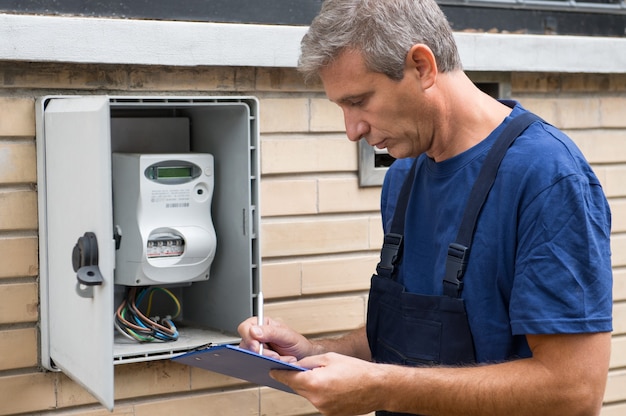
There is a hard boundary in the 2026 market: the Smart Meter threshold. If a property is not equipped with a SMETS2 (second-generation) smart meter, the most cost-effective tariffs from Octopus and the specialized EV rates from EDF and British Gas are inaccessible.
In many prime London Victorian conversions, meter access is a recurring issue. For an expat, ensuring the landlord or the previous owner has upgraded the metering infrastructure is a prerequisite for energy cost control. Without it, you are relegated to "Standard Variable" rates, which in 2026 are projected to remain roughly 25-30% higher than the optimized smart tariffs. There is no longer a "cheap" manual-read tariff in the UK market.

Strategic Recommendation for 2026
To avoid the "naïveté trap" of 2026 energy procurement, the decision matrix should be as follows:
- For the EV and Tech-Heavy Household: Octopus Energy is the inevitable choice. The ability to integrate with vehicle APIs and home batteries allows for a "set and forget" approach to arbitrage that can reduce effective unit rates by up to 40% compared to the price cap.
- For the "Lock-up-and-Leave" Professional: Seek out a supplier with the lowest standing charge, likely a "lite" version of an Octopus or a specialized EDF fixed-term contract. Avoid British Gas in this scenario, as their fixed costs remain high to support their engineering workforce.
- For the Risk-Averse/High-Service Requirement: EDF energy offers the most stable bridge between old-world reliability and new-world green technology. Their backing by the French state provides a layer of institutional "too big to fail" security that matters during periods of geopolitical energy volatility.
- The British Gas Caveat: Only consider the incumbent if you are also utilizing their "HomeCare" insurance products for a legacy property where the risk of plumbing or heating failure outweighs the energy savings found elsewhere.
The 2026 market rewards the active participant. The most expensive kilowatt-hour is the one used at 6:00 PM on a weekday on a British Gas standard tariff. The cheapest is the one used at 2:00 AM on an Octopus Agile tariff. For the informed professional, the "cost of energy" is now a function of behavior and technology, not just a line item on a budget.
Related Stories

CompareTheMarket: Finding Deals on Energy and Broadband

Council Tax Finder: Locating Your Local Authority Website

TV Licensing: The Official Site to Pay (or Declare You Don't Watch)


Comments