Chancenkarte 2026: Top 5 Industries Actively Hiring Opportunity Card Holders This February

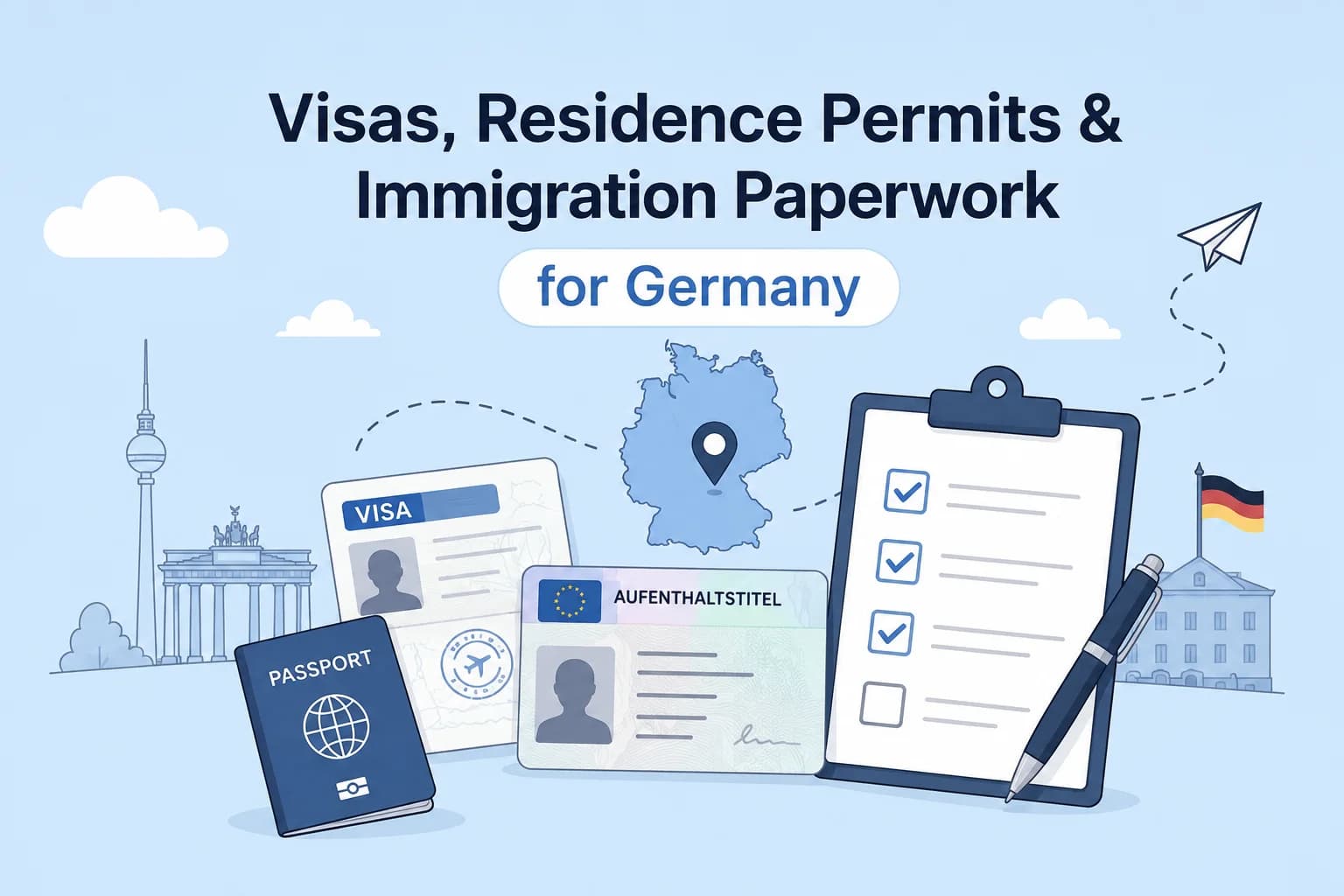
The late-winter chill in Berlin or Munich often masks a frantic internal rhythm within German HR departments. By February 2026, the Chancenkarte, or Opportunity Card, has moved past its experimental phase to become a primary lever for German industrial survival. While the headlines of 2024 and 2025 focused on the legislative hurdles of the Skilled Immigration Act, the current reality for the professional expat is one of surgical demand. The points-based system is no longer a novelty; it is a filter.
For those landing in Germany this February, the landscape is dictated by a paradoxical economic environment. While the broader Eurozone faces cautious growth, Germany’s structural labor deficit—projected to reach seven million workers by 2035—has forced a shift in how the Mittelstand (small to medium-sized enterprises) and DAX-listed giants view foreign talent. The "search" phase permitted by the Opportunity Card is increasingly being met by "speed-hiring" initiatives, provided the candidate fits into five specific strategic pillars.
The Energy Transition and Smart Infrastructure
The most aggressive hiring sector this quarter is the renewable energy sector, specifically at the intersection of civil engineering and digital grid management. Germany’s scheduled 2030 climate targets are now less than four years away, and the backlog of solar, wind, and heat pump installations has reached a critical mass. This is not merely a demand for manual labor; the 2026 focus is on "Project Integration Engineers."

Companies like Siemens Energy, EnBW, and a swarm of Berlin-based "Greentech" startups are actively recruiting Opportunity Card holders who can bridge the gap between hardware installation and software-driven grid stabilization. February is a peak month for this because the federal subsidies for the upcoming construction season are finalized in Q1. Candidates who possess certifications in European energy standards or experience in large-scale battery storage projects are finding that the "points" they earned for the Chancenkarte are secondary to their ability to navigate German technical norms (DIN standards).
The risk for the expat here is the language barrier. While the Opportunity Card allows entry with basic German, the energy sector remains deeply rooted in local regulation. A professional who cannot read a German building permit or safety protocol will find their utility limited to international consulting roles, which are fewer in number than the operational roles currently vacant.
The Digitalization of the ‘Mittelstand’
For decades, the German Mittelstand was criticized for its reliance on analog processes. By early 2026, that narrative has shifted toward a desperate "catch-up" phase. The February hiring surge is particularly visible in the manufacturing hubs of Baden-Württemberg and North Rhine-Westphalia. These companies are no longer just looking for "IT support"; they are hiring for "Industrial AI Implementation."
The specific demand is for professionals who can integrate machine learning into existing manufacturing lines. This is a nuanced role that requires an understanding of legacy hardware. Opportunity Card holders with backgrounds in "IIoT" (Industrial Internet of Things) are being prioritized. These firms are increasingly willing to overlook a lack of C1-level German if the candidate can demonstrate a track record of reducing downtime through predictive maintenance algorithms.
However, a misunderstanding persists among expats regarding the location of these jobs. The most lucrative and stable positions are rarely in Berlin. They are in towns like Gütersloh, Erlangen, or Wolfsburg. An Opportunity Card holder who limits their search to the "Big Three" cities (Berlin, Munich, Hamburg) is ignoring roughly 70% of the active job postings in the industrial digital sector.
Specialized Healthcare and Medical Technology
Germany’s demographic inversion is no longer a forecast; it is an active constraint on GDP. By February 2026, the healthcare sector has moved beyond recruiting general nursing staff to a heavy focus on "Med-Tech Specialists" and "Geriatric Care Management." The legal reality for Opportunity Card holders in this field is complex. While the card allows you to search for work, the "Recognition of Professional Qualifications" (Anerkennung) remains a mandatory hurdle for clinical roles.

The growth area for February 2026 is in the private sector—specifically companies developing diagnostic software and robotic surgical aids. These roles often sit in the "Grey Zone" between healthcare and IT, allowing expats to circumvent some of the more grueling medical licensing requirements while still serving the sector. Regions like the "Medical Valley" around Nuremberg are currently offering "Fast-Track" interviews for Card holders who arrive with experience in healthcare data privacy, particularly under the evolving 2026 EU AI Act regulations.
The warning for healthcare professionals is one of regional bureaucracy. Despite federal laws, the actual processing of professional licenses is handled at the state (Länder) level. An expat in Saxony may face a vastly different timeline for full credential recognition than one in Hesse. Navigating this requires a localized strategy rather than a national one.
Logistics and Supply Chain Resiliency
As of early 2026, Germany has repositioned itself as the "Circular Economy Hub" of Europe. This has created a massive spike in demand for supply chain architects and logistics managers who specialize in "Reverse Logistics." This February, hiring is concentrated in the port cities of the north and the rail hubs of the east, such as Leipzig.
The Opportunity Card is particularly useful here because many of these roles require a "probationary project" or Probearbeit. This allows a company to test a candidate’s ability to optimize a supply chain under German labor and environmental laws before committing to a long-term contract. The demand is driven by new EU-wide supply chain transparency laws scheduled for full enforcement later this year. Companies are hiring now to ensure compliance by the Q4 deadline.
Expats should note that the logistics sector in Germany is highly unionized. Understanding the role of the Betriebsrat (Works Council) is essential. A professional who ignores the social partnership model of German labor will find it difficult to manage teams, regardless of their technical brilliance.
Semiconductors and Advanced Microelectronics
The "Silicon Saxony" cluster around Dresden and the new "Magdeburg Corridor" are the most significant outliers in the German economy this year. Following the massive investments by Intel and TSMC in the mid-2020s, the ancillary supply chain is now in a hiring frenzy. This February, the focus is on "Process Engineers" and "Cleanroom Managers."
For an Opportunity Card holder, this sector offers perhaps the highest "English-friendly" ratio. The technical language of semiconductors is global. However, the competition is fierce. The candidates winning these roles are not just generalists; they are specialists in chemical vapor deposition or lithography. The German government has signaled that it will prioritize visa extensions for those who secure contracts in this "strategically vital" industry.
The risk here is housing. In cities like Magdeburg, the influx of international talent has outpaced the construction of residential units. An expat securing a high-paying role in this sector may still find themselves in a "housing bottleneck" that rivals Munich.
The Structural Reality of the Points System
The Opportunity Card is often marketed as a "Golden Ticket," but by 2026, the professional reality is more akin to a "License to Compete." The points system (based on language skills, age, professional experience, and ties to Germany) gets you through the door, but the "Februar-Einstellung" (February hiring) is meritocratic and fast-paced.

The most significant change in 2026 is the digitalization of the Ausländerbehörde (Foreigners' Authority). While still not instantaneous, the "Digital Visa Extension" for Card holders who have found work is now being tested in major cities. This reduces the risk of being stuck in a legal limbo while transitioning from the search phase to a full work permit.
Navigating the "Recognition Trap"
The most common mistake for the 2026 expat is underestimating the "Anerkennung" (recognition) process. Even with an Opportunity Card, if your degree is not "equivalent" to a German degree, you cannot work in a "regulated profession" (Engineer, Doctor, Lawyer, Teacher).
For February 2026, the advice is clear:
- Analyze the "Partial Recognition" status. Often, a company will hire you on the condition that you complete a "qualification measure" while working. The Opportunity Card allows for this "side-hustle" of up to 20 hours of work while you search or train.
- Target the "Mittelstand" directly. While the big names (Volkswagen, BASF) have massive portals, the 200-person firm in a rural area is more likely to offer a personalized path to residency for a skilled expat.
- Validate your English-first strategy. Unless you are in high-end IT or Semiconductors, the lack of B2-level German will cap your salary and career progression by approximately 30% within the first two years.
The Opportunity Card in February 2026 is a tool for the prepared. The industries listed above are not just "hiring"; they are evolving. The expat who views themselves as a solution to a structural German problem—rather than just a job seeker—will find the transition from "visitor" to "resident" remarkably swift.
Subscribe to Our Newsletter
Welcome to our newsletter hub, where we bring you the latest happenings, exclusive content, and behind-the-scenes insights.
*Your information will never be shared with third parties, and you can unsubscribe from our updates at any time.
Related Stories

The Rise of 'Employee Leasing' in Germany: Understanding Arbeitnehmerüberlassung for Expats in 2026

Sweden’s Second-Hand Market: Essential Apps for Sustainable Living

Top AI Language Apps for Learning German and Swedish on the Go


Comments