Leveraging the 2026 Skilled Immigration Matching Portal: A Guide for IT Expats
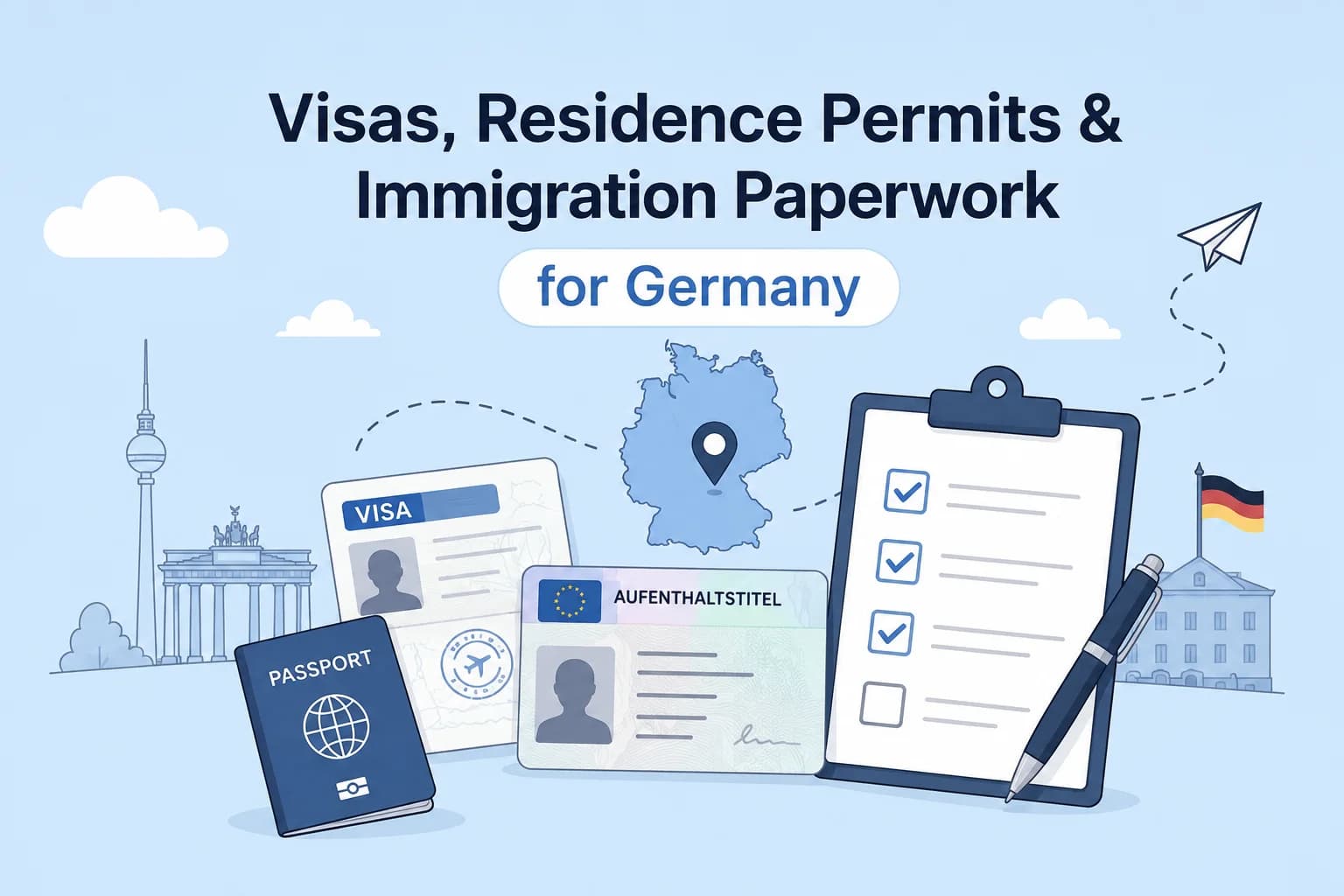
The transition of Germany’s immigration strategy from a reactive, paper-heavy bureaucracy to the centralized 2026 Skilled Immigration Matching Portal marks the end of the "speculative application" era for international IT professionals. For a decade, the bottleneck for non-EU talent was not a lack of interest from employers, but the administrative chasm between a job offer and a residence permit. By mid-2026, this chasm is being bridged by an integrated digital layer that serves as both a recruitment filter and a legal pre-clearance engine.

To the uninitiated, the portal appears to be a state-run LinkedIn. This is a fundamental misunderstanding of its utility. The platform, developed under the directive of the Federal Ministry of Labour and Social Affairs (BMAS) and the Federal Office for Migration and Refugees (BAMF), is designed to solve the "equivalence" problem. In the German labor market, the primary friction point is rarely a lack of skill; it is the lack of a verifiable, German-standard qualification. The 2026 portal automates the "Anabin" database checks and preliminary professional recognition, meaning that by the time an IT specialist appears in an employer’s search results, their legal eligibility to work in Germany has already been provisionally certified.
For the IT expat, this necessitates a shift in how professional identity is presented. The German recruitment culture, even in high-growth tech sectors, prioritizes Eignung—a specific, documented suitability. The portal’s algorithm is projected to weight formal certifications and specific years of "demonstrable experience" in niche domains (notably cybersecurity, cloud architecture, and green-tech systems) far more heavily than the vague, achievement-oriented bullet points common in US or UK resumes. If your data is not structured to meet these verification standards, you are effectively invisible to the system.

The Mechanics of the 2026 Matching Ecosystem
The portal operates on a dual-logic system. First is the "Passive Pull," where employers search for pre-vetted candidates who meet the 2026 revised points-based criteria under the Chancenkarte (Opportunity Card) framework. Second is the "Active Match," where the system alerts candidates to vacancies that align with their verified credentials.
By early 2026, the labor shortage in Germany’s IT sector is expected to exceed 150,000 vacant positions, according to Bitkom projections. However, the 2026 reality is one of "selective desperation." While the need is high, the tolerance for administrative "edge cases"—candidates whose degrees are from non-accredited institutions or who lack a clear trajectory—has vanished. The portal is the tool Germany is using to professionalize the "skilled" in "skilled immigration."
A critical, often overlooked feature of the 2026 portal is the "Employer-Sovereignty Clause." Unlike traditional job boards, a "match" on the state portal carries a high expectation of intent. In German professional etiquette, responding to a portal-initiated match with a generic inquiry or an incomplete profile is viewed as a breach of professional conduct. The expectation is that your profile is "contract-ready" the moment you activate your visibility.

Navigating the Linguistic and Regulatory Hurdles
There remains a persistent myth that the German IT sector is an English-only environment. While the 2026 portal allows for English-language profiles, the backend matching algorithm accounts for the "Regional Integration Forecast." Candidates with a B1 level of German (or higher) are scheduled to receive a higher visibility ranking in search results for roles outside of Berlin and Munich—specifically in the "Mittelstand" hubs of Baden-Württemberg and North Rhine-Westphalia, where the bulk of industrial IT demand resides.
Furthermore, the 2026 system is strictly integrated with the "Vander Elst" and "Blue Card" regulatory updates expected in late 2025. This means the portal will automatically flag if a salary offer meets the specific threshold for a Blue Card in a "shortage occupation." If the offer falls €100 short of the threshold, the portal will not allow the matching process to proceed to the contract stage, effectively preventing the long, manual appeals that characterized the 2022-2024 era.
The risk for the modern expat is over-reliance on the "matching" aspect while ignoring the "regulatory" aspect. The portal does not replace the visa; it merely automates the approval of the Zustimmung (the consent from the Federal Employment Agency). If you enter the portal with a complex family reunification need or a history of freelance work that has not been legally categorized as "employment," the system may stall.
The Precision Requirement: A New Mental Model
To succeed in this environment, a candidate must treat their portal entry as a legal deposition rather than a marketing brochure. The 2026 portal uses a structured data format. Free-text fields are secondary to structured "Skill Clusters." For example, listing "Cloud Computing" is insufficient; the system requires specific documentation of "Infrastructure as Code (IaC) within EU-GDPR compliant frameworks."
This level of precision is not just about the algorithm; it reflects the German professional mindset. An employer using the portal is looking for a "Plug-and-Play" professional who understands the regulatory constraints of the German market. Showing that you have optimized your profile for these constraints—by uploading clear, translated PDFs of every certification and providing a clear "Equivalency Statement"—is the highest form of professional etiquette in this new digital landscape.
The 2026 Skilled Immigration Matching Portal is a tool for the disciplined. It rewards those who understand that in Germany, professional mobility is a function of administrative clarity. Those who attempt to "game" the system with keywords without the underlying documentation will find themselves filtered out by a system that prioritizes legal certainty over speculative potential. Your goal is not to be the most interesting candidate on the platform, but the one whose profile presents the least amount of administrative friction.
Subscribe to Our Newsletter
Welcome to our newsletter hub, where we bring you the latest happenings, exclusive content, and behind-the-scenes insights.
*Your information will never be shared with third parties, and you can unsubscribe from our updates at any time.
Related Stories

The Rise of 'Employee Leasing' in Germany: Understanding Arbeitnehmerüberlassung for Expats in 2026

The 2026 Skills England Update: New Fast-Track Visa Routes for Tech and Healthcare Professionals

Top AI Language Apps for Learning German and Swedish on the Go


Comments