Stockholm’s Green Tech Boom: How to Pivot into Sustainable Energy Careers in 2026

For the global professional eyeing a move to Stockholm in 2026, the city’s green tech landscape has moved past the era of visionary power-points and into the grueling phase of industrial execution. The "Northvolt Effect"—the massive, state-backed push toward a fossil-free economy—has evolved. By 2026, the market is no longer hiring for "sustainability generalists" or climate evangelists. Instead, the demand has pivoted toward those who can navigate the hard logistics of electrification, the complexities of EU regulatory reporting, and the engineering required to stabilize a grid under the weight of a decarbonizing continent.
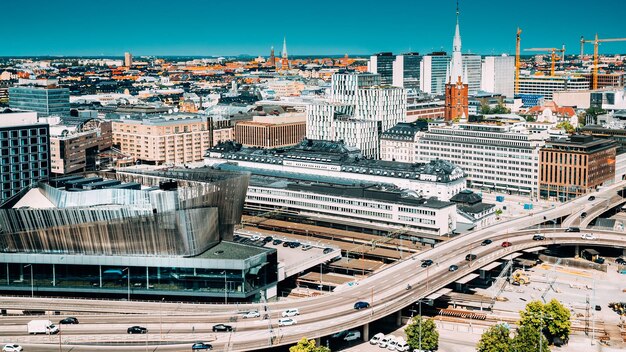
The Swedish capital is currently navigating a period of industrial maturity. While the initial venture capital frenzy of the early 2020s has stabilized, the structural demand for talent in energy storage, carbon capture, and green maritime technology remains projected to grow by 12% annually through 2027. This growth is underpinned by the Swedish government’s "Climate Act" and the European Union’s Fit for 55 package, which, by 2026, will have shifted from high-level policy to enforceable corporate mandates. For the expat professional, this means the entry barrier has risen; the "Stockholm boom" is now an "operational grind" requiring deep technical or legal expertise rather than just enthusiasm.
The Regulatory Anchor: CSRD and the 2026 Reporting Cycle
By early 2026, the Corporate Sustainability Reporting Directive (CSRD) will be the single most important document in a Swedish C-suite. Large companies, and an increasing number of SMEs within their supply chains, are now legally required to disclose their environmental impact with the same rigor as their financial audits. This has created a massive, under-served market for professionals who can bridge the gap between data science, legal compliance, and environmental science.
The pivot here for an international professional is not into "green" roles per se, but into "green-adjacent" legal and financial roles. The Stockholm market is expected to face a shortage of at least 3,000 specialists capable of navigating the European Sustainability Reporting Standards (ESRS). If you are a financial controller with experience in complex regulatory audits, or a data architect who can build transparent supply chain tracing systems, your value in Stockholm is significantly higher than that of a traditional energy engineer. The risk of "greenwashing" has transitioned from a PR nightmare to a legal liability, and Swedish firms are paying a premium for those who can protect them from regulatory scrutiny.

The Infrastructure Reality: Grid Parity and Power-to-X
The primary bottleneck in Sweden’s green transition as we enter 2026 is no longer a lack of capital, but a lack of grid capacity. Stockholm’s energy infrastructure is struggling to keep pace with the electrification of transportation and the massive power requirements of data centers. Consequently, the most secure career pivots are currently found in "grid-tech" and Power-to-X (P2X) technologies.

Engineers and project managers specializing in high-voltage direct current (HVDC) transmission, smart grid software, and battery storage optimization are in high demand. Vattenfall and various Stockholm-based startups are projected to increase their capital expenditure on grid modernization by 15% in 2026 to meet the government’s 2030 electrification targets. For an expat, the challenge is that these roles often require a nuanced understanding of Swedish municipal regulations and "Mark- och miljödomstolen" (the Land and Environment Court). Navigating these legal hurdles is where many foreign projects stall; an expat who understands both the global engineering standard and the local Swedish regulatory hurdles is a rare and highly sought-after asset.
The Labor Market: Work Permits and the "Tidö" Effect
Navigating the move to Stockholm requires a sober assessment of Sweden’s evolving immigration policy. As of late 2025, the Swedish Migration Agency (Migrationsverket) has implemented a more rigorous salary threshold for work permits, which is now tied to a percentage of the median salary. While this was designed to curb low-skilled migration, it has also increased the administrative burden on tech firms.
Prospective expats must ensure their salary offers align with the updated 2026 benchmarks, which are expected to hover around 40,000 SEK per month for specialized roles. Furthermore, the EU Blue Card has become a more attractive route for high-income professionals, offering a faster path to permanent residency and better mobility within the EU. However, applicants should be aware that the processing times for Swedish work permits, while improved through the "certified employer" system, can still take three to six months. The professional risk here is "limbo"—waiting for a permit while the project you were hired for has already moved into its next phase.
Cultural Nuance: Beyond the "Fika" Stereotype
The cultural entry into Stockholm’s tech scene is often underestimated. While English is the corporate language in nearly every green-tech firm, the social and professional integration requires a mastery of Swedish "consensus culture." In 2026, the most successful expats are those who recognize that decision-making in Sweden is a horizontal process. The "hero CEO" model common in the US or UK is often met with resistance in Stockholm.
To pivot successfully, one must understand Jantelagen—the cultural tenet that you are not better than anyone else. In a professional context, this translates to a refusal to tolerate "brilliant jerks." Your technical expertise in carbon sequestration or hydrogen electrolysis is irrelevant if you cannot build consensus across a multidisciplinary team. Furthermore, while the office is English-speaking, the lunchroom is often Swedish-speaking. To reach the upper tiers of Swedish corporate management, at least a B2 level of Swedish is increasingly viewed as a requirement for long-term retention, particularly as firms look to domesticate their leadership teams after the initial wave of international expansion.
The Economic Catch-22: Salaries vs. The Housing Crisis
The most significant material risk to a Stockholm pivot is the city’s chronic housing shortage. While the "green boom" has pushed salaries higher, they have not kept pace with the cost of living in the central districts. As of early 2026, a one-bedroom apartment in Södermalm or Kungsholmen can easily consume 40% of a post-tax specialist salary.
Many professionals are now opting for the "pendler" (commuter) lifestyle, living in suburbs like Solna or even further afield in Uppsala, which has its own thriving life sciences and green-tech cluster. When negotiating a contract, an informed expat should not just look at the gross salary but should explicitly ask for relocation assistance that includes "first-hand" apartment contract leads. The Swedish rental market is bifurcated into "first-hand" (permanent, regulated) and "second-hand" (temporary, expensive) contracts. Without a first-hand contract, your long-term financial stability in Stockholm is fragile.
Sector Focus: Circularity and Sustainable Maritime
As the battery sector reaches a plateau of consolidation, the next frontier in the 2026 Stockholm market is circularity—specifically, the recycling of rare earth metals and the decarbonization of the Baltic shipping lanes. Companies focused on "Circular Economy" business models are scheduled to receive significant EU subsidies through 2027.

Professionals with backgrounds in chemical engineering or supply chain logistics who can transition into battery recycling or "green shipping" are entering a less crowded field than those in solar or wind. The Stockholm region is positioning itself as a hub for electric hydrofoil technology and hydrogen-powered freight. These sectors are smaller but are currently "talent-starved," offering more leverage for international hires than the saturated software-as-a-service (SaaS) market.
The "Tidö" Political Context and Future Outlook
The current political climate in Sweden, governed by a coalition dependent on the Sweden Democrats, has led to a more pragmatic, and some would say cautious, approach to green subsidies. While the long-term trajectory is firmly fossil-free, the immediate focus is on nuclear power expansion and industrial competitiveness.
By 2026, the government is expected to have finalized the framework for new nuclear construction. This represents a significant pivot point for energy professionals. If your background is in traditional power generation or nuclear engineering, Stockholm is suddenly a viable destination for the first time in thirty years. This shift also means that "green" is being redefined to include "low-carbon" nuclear, a distinction that matters for those whose careers are built on specific ESG (Environmental, Social, and Governance) definitions.
A Practical Mental Model for the 2026 Pivot
To move into Stockholm’s sustainable energy sector in 2026 without being blindsided, you must view the city not as a startup playground, but as an industrial heartland in the midst of a high-stakes upgrade.
- Skills Recalibration: Move away from "sustainability strategy" toward "sustainability operations." Can you audit a supply chain for the CSRD? Can you optimize a battery management system? Can you manage a 500-million SEK infrastructure project through the Swedish courts?
- The "Second City" Strategy: Consider if your role is actually needed in Stockholm, or if the "Green North" (Skellefteå or Luleå) is where the real industrial action is. Many Stockholm firms maintain their HQ in the capital but do their hiring for the projects themselves in the north.
- Financial Reality Check: Verify your salary against the 2026 cost of living and housing data. A 70,000 SEK salary sounds high until you realize the tax rate and the cost of a private rental in a city with a 20-year public housing queue.
The "Green Boom" is no longer a gold rush; it is an established industry. For the professional who brings precision, regulatory fluency, and a willingness to integrate into the Swedish consensus model, Stockholm offers some of the most stable and impactful career paths in the world. For the naive or the unprepared, it offers an expensive lesson in the difference between climate ambition and industrial reality.
Subscribe to Our Newsletter
Welcome to our newsletter hub, where we bring you the latest happenings, exclusive content, and behind-the-scenes insights.
*Your information will never be shared with third parties, and you can unsubscribe from our updates at any time.
Related Stories

Taxes for Swedish Freelancers: A 2025 Guide (F-skatt)

The 2026 Skills England Update: New Fast-Track Visa Routes for Tech and Healthcare Professionals

The Rise of 'Employee Leasing' in Germany: Understanding Arbeitnehmerüberlassung for Expats in 2026


Comments