

The 9-Euro Friction: Why Germany’s Radical Subsidy Proposal is Reframing the 2026 Inflation Debate

In the sterile, glass-fronted corridors of the Schleswig-Holstein Landtag, a policy ghost has returned to the table. The proposal by Green Party politicians to resurrect the 9-euro monthly transport ticket is not merely a nostalgic nod to the chaotic summer of 2022; it is a direct challenge to the fiscal tightening scheduled for the 2026 budgetary cycle. For the international professional navigating Germany’s complex cost-of-living landscape, this is less about a cheap commute and more about a fundamental disagreement over how the state should mitigate the scheduled escalation of carbon pricing and infrastructure decay.
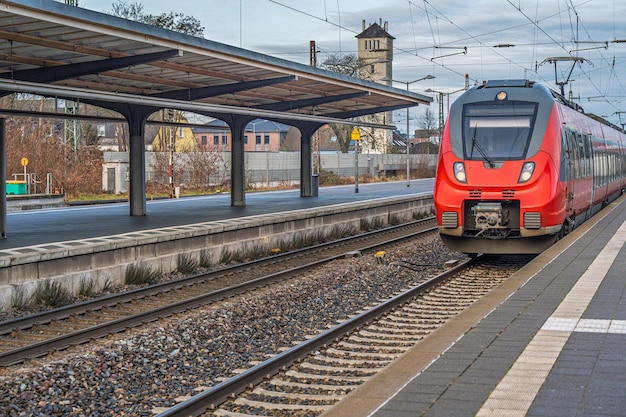
The friction lies in the numbers. As of early 2025, the standard Deutschlandticket—the 9-euro ticket’s successor—has already seen its price point adjusted from 49 to 58 euros to account for mounting operational deficits. Projections for 2026 indicate that without significant federal intervention, the price could face further upward pressure as the regional transport authorities (Aufgabenträger) grapple with a combined funding gap estimated to exceed €2.5 billion. The Greens’ push for a return to the 9-euro mark represents a radical departure from the current trajectory of 'cost-truth' in public services, aiming instead to use mobility as a primary lever for inflation suppression.
The 2026 Macroeconomic Context
To understand the weight of this proposal, one must look at the specific economic pressures slated for 2026. This is the year when Germany’s national emissions trading system (nEHS) for transport and heating is scheduled to transition into a more aggressive pricing phase. Under current regulations, the fixed price per ton of CO2 is projected to rise significantly, directly impacting the cost of private car ownership and diesel logistics.
Advocates for the 9-euro ticket argue that the move would act as a 'social shock absorber.' By drastically lowering the entry barrier to public transit, the government could theoretically offset the spike in energy costs that will hit households in 2026. However, institutional signals from the Federal Ministry of Finance remain skeptical. The 'Schuldenbremse' (debt brake) continues to limit the federal government’s ability to offer open-ended subsidies. For the expat professional, the takeaway is clear: any return to a 9-euro price point would likely necessitate a redirection of funds away from network modernization or a significant increase in other tax categories.
Infrastructure vs. Accessibility
The tension point for most commuters is not just the price, but the reliability of the DB (Deutsche Bahn) network. The VDV (Association of German Transport Companies) has repeatedly warned that price-focused subsidies often cannibalize investment budgets. In 2026, several major rail corridors, including sections of the critical Riedbahn and Northern routes, are scheduled for 'Generalsanierung' (high-performance renovation).
If the federal government were to adopt the Greens' proposal, it would face a binary choice: fund the subsidy or fund the repairs. For those who rely on the precision of the S-Bahn or regional expresses to reach their offices in Frankfurt or Munich, a 9-euro ticket that buys a seat on a delayed or canceled train offers little real-world value. The risk for the uninformed professional is assuming that a lower price signifies a healthier system; in reality, it may signal a period of reduced service frequency as operators struggle to balance the books.
The Regional Disparity Factor
One of the most significant misunderstandings regarding the 9-euro ticket is its utility outside of metropolitan hubs. In Schleswig-Holstein—where the proposal originated—the 'last mile' problem remains acute. For expats living in the periphery of cities like Kiel or Lübeck, the 9-euro ticket is an incomplete solution. Institutional data suggests that while urban dwellers see an immediate reduction in monthly outgoings, rural residents still find car ownership a functional necessity.

This creates a secondary economic effect. A 9-euro ticket primarily benefits the urban workforce, potentially widening the wealth gap between metropolitan centers and the hinterland. Policy analysts at organizations like the OECD have noted that while flat-rate tickets are excellent for social inclusion, they do little to solve the structural lack of transport infrastructure in less-populated regions. Any professional considering a move to the German countryside based on 'cheap transport' should look closer at the actual frequency of the RE (Regional-Express) lines rather than the ticket price.
The 2026 Legislative Horizon
Is a 9-euro ticket inevitable? Currently, the political signals are mixed. The Greens’ proposal serves as a crucial bargaining chip in the lead-up to the next federal budgetary negotiations. However, the majority of the current coalition government views the 58-euro Deutschlandticket as the sustainable 'sweet spot.' For the ticket to drop back to 9 euros, there would need to be a massive shift in the perception of transport as a social right rather than a commercial service.
Investors and professionals should monitor the 'Regionalisierungsmittel'—the federal funds given to states to run local transport. If these are not significantly increased in the 2026 budget, any price reduction will be mathematically impossible without cutting services. The current 'Green' push is therefore a litmus test for the government's commitment to its climate goals versus its commitment to fiscal austerity.
To navigate this, the informed professional should plan their 2026 mobility budget around the current 58-euro baseline, while recognizing that the political debate itself will likely trigger fluctuations in corporate transport allowances. The 9-euro ticket is a powerful rhetorical tool for combating inflation, but its implementation would represent a total recalibration of the German social contract. The risk for the naive is expecting the price of 2022 to return without the logistical trade-offs that characterized that era.
Subscribe to Our Newsletter
Welcome to our newsletter hub, where we bring you the latest happenings, exclusive content, and behind-the-scenes insights.
*Your information will never be shared with third parties, and you can unsubscribe from our updates at any time.
Related Stories

The BVG Fahrinfo App: Mastering Public Transport in Berlin

The DB Navigator App: Your Ultimate Tool for German Trains

Carsharing and E-Scooters: Modern Mobility in German Cities


Comments