US Gun Laws 101: What Expats Should Know About State-Level Regulations

7 min read
0Cultureus
US Gun Laws 101: What Expats Should Know About State-Level Regulations
Culture

For the arriving foreign professional, the American relationship with firearms is rarely understood through the lens of the Second Amendment alone. While international headlines focus on the high-profile politics of the gun debate, the operational reality for an expatriate is defined by a dizzying, high-stakes patchwork of state statutes, municipal ordinances, and federal prohibitions that can turn a lapse in geography into a felony.

The fundamental misconception held by many moving to the United States is that "American gun law" exists as a singular entity. In reality, crossing a state line in the U.S.—an act as mundane as a weekend drive—can be the legal equivalent of crossing an international border. By early 2026, the divergence between "permissive" states and "restrictive" states has reached a historical zenith, creating a landscape where an object that is a protected civil right in one jurisdiction becomes a prohibited weapon in another.

US state borders

The Federal Barrier: Non-Immigrant Status

Before navigating state-level nuances, the expat must confront the federal baseline. Under the Gun Control Act of 1968, most non-immigrant aliens—those on H-1B, L-1, O-1, or TN visas—are categorically prohibited from possessing or purchasing firearms or ammunition. This is a point of frequent legal jeopardy for professionals from Commonwealth or European countries who may assume that their legal residency status confers the same rights as a Green Card holder or a U.S. citizen.

There is, however, a narrow and specific exception: the hunting license. Federal law permits non-immigrant aliens to possess a firearm if they are in possession of a valid, state-issued hunting license. This has become the primary, if somewhat bureaucratic, workaround for expats seeking home defense or sport-shooting opportunities. However, this exception is not a blanket immunity. The license must be valid at the time of purchase and possession, and it does not supersede state-level restrictions on the type of firearm or where it may be carried. For the executive moving to a tech hub like Seattle or a financial center like New York, the interaction between this federal exception and local "Assault Weapon" bans or magazine capacity limits requires precise legal auditing.

The Geography of Permission: Permitless Carry vs. Sensitive Locations

The most significant shift in the 2025–2026 regulatory environment is the near-total bifurcation of carry laws. As of late 2025, 29 states have adopted "Constitutional Carry" or permitless carry, allowing any legal resident (who is not otherwise prohibited) to carry a concealed firearm without a state-issued permit. For an expat residing in Texas, Tennessee, or Florida, the visibility of firearms in public spaces—either holstered on a belt or "printing" through a garment—is a standard element of the social fabric.

Conversely, "Restrictive" states, including California, New York, New Jersey, and Illinois, have responded to recent Supreme Court rulings by dramatically expanding "sensitive location" designations. In these jurisdictions, even if an individual holds a hard-to-obtain carry permit, the list of places where a firearm is prohibited often includes parks, public transit, hospitals, and any private business that has not explicitly posted a sign inviting firearms. For a professional, this creates a "geographic minefield." A legal firearm stored in a vehicle during a commute may become an illegal possession the moment that vehicle enters a designated sensitive zone or a school perimeter.

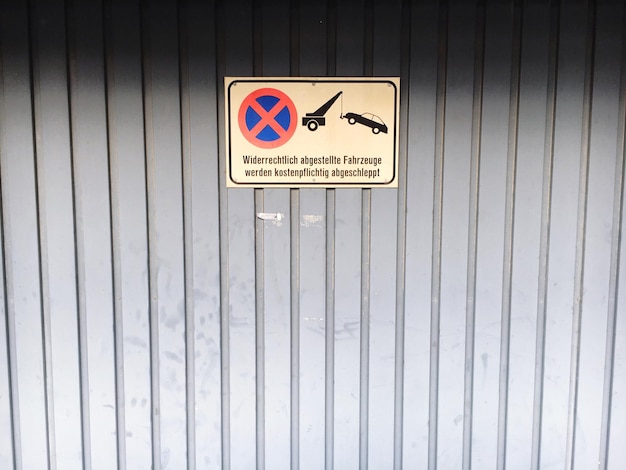
concealed carry sign

Reciprocity and the "Peaceable Journey" Trap

For the mobile professional, the concept of "reciprocity"—where one state honors another’s carry permit—is often the greatest source of legal risk. There is no national reciprocity in the United States. A permit issued in Virginia is unrecognized in neighboring Maryland or the District of Columbia.

The Firearm Owners Protection Act (FOPA) provides a federal "safe passage" provision, allowing individuals to transport firearms through restrictive states if the weapon is unloaded, locked in a container, and inaccessible from the passenger cabin. However, this protection is "interstate"—it only applies if the traveler is moving from one legal jurisdiction to another without "unnecessary stops." Expats have been arrested during hotel stays or flight diversions in states like New Jersey or New York because their "journey" was deemed to have paused, thereby stripping them of federal protection and exposing them to strict local possession laws.

Workplace Policy and Private Property

In the U.S., the intersection of gun laws and professional life is governed as much by corporate policy as by statute. Most multi-national corporations headquartered in the U.S. maintain "Gun-Free Workplace" policies. In "At-Will" employment states, an expat can be terminated for having a firearm in their vehicle in the company parking lot, even if state law technically allows it.

However, a growing number of states have passed "Parking Lot Laws," which prevent employers from banning employees from keeping firearms in their locked, private vehicles while at work. For an expat manager, understanding these laws is critical not just for personal compliance, but for HR management. Disciplining an employee for a firearm in a vehicle in a state like Oklahoma or Kentucky could result in a wrongful termination suit, whereas ignoring the same act in a California office could lead to corporate liability.

Use of Force: "Stand Your Ground" vs. "Duty to Retreat"

Perhaps the most profound cultural and legal shock for expats is the variation in self-defense doctrine. The United States is split between two primary philosophies:

  1. Stand Your Ground: Prevalent in the South and Midwest, these laws remove the "duty to retreat." If an individual is in a place they have a legal right to be, they may use deadly force if they reasonably fear imminent death or great bodily harm.
  2. Duty to Retreat: Prevalent in the Northeast and West Coast, these laws require an individual to attempt to safely exit a confrontation before resorting to deadly force, unless they are inside their own home (the "Castle Doctrine").

For an expat, the "reasonableness" of fear is a subjective standard that is often viewed through the lens of local jury pools. An action deemed justifiable in a rural Arizona county may result in a murder indictment in a metropolitan area of Massachusetts.

modern courthouse architecture

Red Flag Laws and Administrative Risk

Scheduled for further expansion in the 2026 legislative cycles of several "Purple" states are Extreme Risk Protection Orders (ERPOs), commonly known as "Red Flag Laws." These allow police or family members to petition a court to temporarily remove firearms from an individual deemed a danger to themselves or others.

For the foreign professional, an ERPO is not just a second-amendment issue; it is an immigration risk. While a Red Flag order is often a civil matter, the underlying allegations—or any violation of the order—can trigger "conduct-based" inadmissibility under U.S. immigration law. Even without a criminal conviction, an expat’s visa can be revoked if they are deemed to pose a threat to public safety, a determination that has become increasingly streamlined through inter-agency data sharing between state courts and the Department of Homeland Security.

A Practical Model for the Next Interaction

To navigate the American firearm landscape without naïveté, the expat must adopt a model of "Jurisdictional Vigilance." This requires:

  • Assumption of Non-Reciprocity: Never assume a legal status in one state transfers to another.
  • Verification of Visa Exceptions: If on a non-immigrant visa, ensure a hunting license is active and physically present before touching a firearm or ammunition.
  • Audit of "Sensitive Locations": If living in a restrictive state, map the daily commute against prohibited zones, which in 2026 often include entire downtown corridors or transit networks.

The risk for the professional is rarely the "outlaw" scenario depicted in cinema; it is the administrative felony. In the U.S., gun regulation is a high-velocity legal environment where the burden of precision rests entirely on the individual, regardless of their country of origin or professional standing.

Comments

0/2000

STAY CONNECTED WITH THE EXPAT COMMUNITY

Subscribe to get expat tips, local insights, and connect with professionals around the world.