
The STEM OPT Extension: Navigating the 2026 Work Authorization Rules

7 min read
0Visas Permitsus
The STEM OPT Extension: Navigating the 2026 Work Authorization Rules
Visas Permits

The bridge between the American university and the American corporation has rarely felt more fragile. By early 2026, the STEM OPT (Optional Practical Training) extension—the 24-month period allowing F-1 visa holders in science, technology, engineering, and mathematics to work in the U.S. beyond their initial year—has evolved from a standard administrative formality into a high-stakes compliance obstacle course. For the professional navigating this landscape, the stakes are no longer just about career progression; they are about maintaining legal status in an era where Department of Homeland Security (DHS) oversight has shifted from passive record-keeping to active enforcement.

The reality facing international talent in 2026 is defined by a paradox: while the U.S. government remains rhetorically committed to attracting global STEM talent to compete with rising technological powers, the bureaucratic machinery has become increasingly granular. The "bridge" provided by the three-year OPT window is increasingly being used as the primary, and often only, buffer against the structural volatility of the H-1B lottery. For the expat professional, understanding the mechanics of this extension is now a prerequisite for professional survival.

stem student office

The Shift Toward "Integrity-Based" Oversight

The regulatory environment heading into 2026 is characterized by "integrity-based" oversight. This translates to a significantly higher frequency of site visits and a more rigorous audit of Form I-983, the Training Plan for STEM OPT Students. Historically, many employers viewed the I-983 as a "set it and forget it" document. In the current 2025-2026 cycle, however, USCIS and Immigration and Customs Enforcement (ICE) have increased their focus on whether the "training" described in the plan is actually occurring.

If a site visit occurs—and projections from current DHS enforcement trends suggest a 15% increase in such visits for firms with high densities of OPT holders—the inspector is not merely checking if the employee is present. They are verifying that the employer-employee relationship is bona fide and that the individual is not functioning as a "labor for hire" through a third party in a way that bypasses the program’s intent. For the professional, this means your daily tasks must demonstrably align with the specialized goals outlined in your initial filing. Discrepancies are no longer viewed as clerical errors; they are flagged as material violations that can lead to the immediate termination of the SEVIS record.

The E-Verify Trap and Employer Obligations

As of late 2025, the requirement for employers to be enrolled in E-Verify to host STEM OPT candidates remains non-negotiable. While this seems straightforward, a growing number of mid-sized firms and startups are finding themselves in "compliance debt." A professional joining a fast-scaling tech firm must verify not just that the company is enrolled in E-Verify, but that their specific work location is registered.
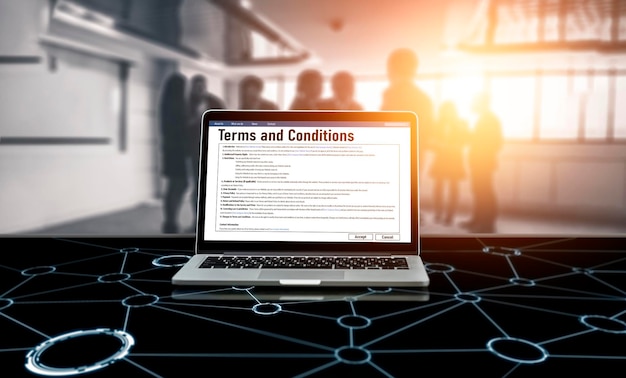

In 2026, the complexity increases for remote and hybrid workers. The DHS has tightened the definition of a "worksite." If a professional is working remotely from a different state than the company’s headquarters, and that specific home office or regional hub is not accounted for in the E-Verify system or the I-983, the work authorization is technically at risk. The burden of proof has shifted to the employee to ensure their employer’s HR department has updated the SEVP (Student and Exchange Visitor Program) Portal within the mandatory 10-day window for any material change.

digital legal document

The 180-Day Automatic Extension: A False Sense of Security

One of the most misunderstood aspects of the STEM OPT transition in 2026 is the 180-day automatic extension. When a professional timely files their extension application (Form I-765), their work authorization is automatically extended for up to 180 days while the application is pending. However, this is a domestic protection only.

For those planning international travel or requiring a renewed driver’s license, the 180-day rule offers little relief. Many state DMVs and international airlines do not recognize a pending I-765 receipt notice as valid proof of status. Furthermore, the 2026 processing times for the California and Potomac Service Centers are projected to hover around the five-to-seven-month mark, pushing many applicants to the absolute edge of that 180-day window. The "Premium Processing" fee, which has seen incremental scheduled increases through 2025, is no longer a luxury—it is becoming a mandatory "tax" for anyone who cannot afford a half-year of travel restrictions.

The Narrowing H-1B Bridge

The 2026 H-1B lottery cycle is expected to remain hyper-competitive, with the number of registrants likely exceeding 750,000 for the 85,000 available slots. This makes the STEM OPT extension the most valuable asset a foreign professional can hold. It provides three "bites at the apple" for the lottery.

However, a new friction point has emerged: the "Cap-Gap" extension. For a professional whose OPT expires in June but whose H-1B petition is selected for an October 1st start, the Cap-Gap provides a bridge. But in the 2026 landscape, any denial or "Request for Evidence" (RFE) on the H-1B petition can instantly terminate the Cap-Gap protection. Relying on this bridge without a secondary contingency plan—such as an O-1 visa or an internal transfer to an overseas office—is a gamble that many high-level expats are now unwilling to take.

Material Changes and the Reporting Ghost

The most frequent cause of status termination in 2026 is not a lack of work, but a failure to report. The "material change" rule covers more than just a change in employer. It includes:

  • Any decrease in compensation that is not part of a company-wide reduction.
  • Changes to the "Supervisor" listed on the I-983.
  • A shift in the ratio of remote to in-office work.
  • A change in the employer’s EIN (often caused by mergers or acquisitions).

In the current economic environment of corporate restructuring and "lean" tech operations, these changes happen frequently. The 2026 USCIS system is increasingly automated, and data-sharing between the Department of Labor and DHS means that if your reported income on tax filings deviates significantly from your I-983 projections without an updated filing, it may trigger an automated flag.

professional meeting skyscraper

Unemployment Limits and the 150-Day Rule

The math of unemployment remains a hard ceiling. Over the entire 36-month OPT period (12 months of initial OPT plus the 24-month extension), a professional is allowed a maximum of 150 days of unemployment. By 2026, the monitoring of these days has become more precise through the SEVP Portal.

What many professionals overlook is that "employment" for STEM OPT must be at least 20 hours per week and must be directly related to the STEM degree. Voluntarily taking a "sabbatical" or transitioning between roles for more than a few weeks can rapidly deplete this 150-day lifetime allowance. In a 2026 labor market that is increasingly volatile due to AI integration in entry-to-mid-level STEM roles, the "unemployment clock" is the single greatest threat to long-term residency.

The 2026 Recalibration

Navigating the STEM OPT extension in 2026 requires a shift in mindset from "student" to "compliance officer." The program is no longer a mere extension of one’s education; it is a professional probationary period under the microscope of federal oversight.

To survive this period, the professional must maintain a "Compliance File" that mirrors the employer’s own records. This includes copies of every I-983, every receipt notice, and a log of every day spent outside the U.S. or in between roles. The assumption that your employer’s HR department or the university’s Designated School Official (DSO) is tracking these nuances for you is a dangerous naïveté.

The 24-month extension is a powerful tool for building a career in the world’s largest economy, but it is a tool with sharp edges. As we move through 2026, the margin for error is effectively zero. Every promotion, every move to a new apartment, and every change in a training goal must be documented with the same precision as the engineering or data science work that earned the visa in the first place. For the informed professional, the goal is not just to work, but to remain "unassailable" in the eyes of the system.

Comments

0/2000

STAY CONNECTED WITH THE EXPAT COMMUNITY

Subscribe to get expat tips, local insights, and connect with professionals around the world.