Dunkin’ vs. Starbucks: Decoding the Regional Coffee Wars in the US

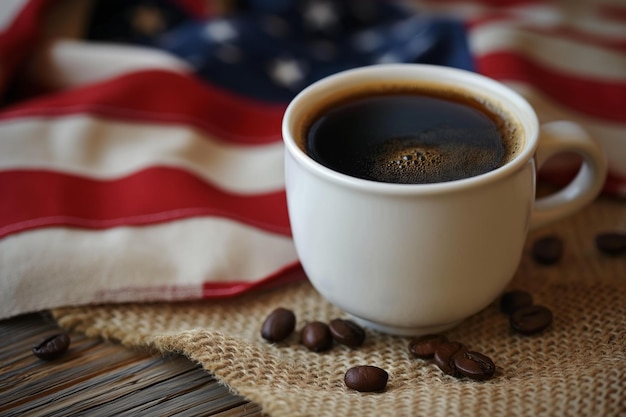
For a foreign professional arriving in the United States, the choice between a green mermaid and a bright orange-and-pink typeface is rarely about the chemical composition of the caffeine. To the uninitiated, Starbucks and Dunkin’ (formerly Dunkin’ Donuts) appear to be interchangeable high-volume dispensers of Arabica. To the resident, however, these brands represent a profound socio-economic and regional shorthand. Carrying a specific cup into a Monday morning meeting is a semiotic act; it signals one’s relationship to labor, class, and regional heritage.
The "Dunkin’ Line" is a tangible cultural border that primarily bisects the American Northeast from the rest of the country. In Massachusetts, Rhode Island, and parts of New York, Dunkin’ is not a choice but a default infrastructure, akin to the power grid. To walk into a Boston boardroom with a Starbucks cup is to project an air of "outsiderness" or, more pointedly, an aspirational pretense that may grate against the local ethos of utilitarianism. Conversely, in the tech corridors of Seattle or the financial districts of San Francisco, the Starbucks cup is the standard-issue accessory of the professional class, where Dunkin’ is often viewed as a "flyover state" novelty or a relic of a bygone industrial era.
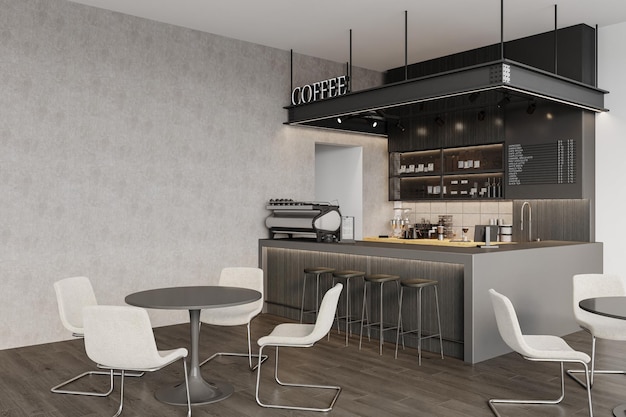
Understanding this rivalry requires moving past the menu to the "Third Place" philosophy. Historically, Starbucks positioned itself as a sanctuary between work and home—a European-inspired lounge where one pays a premium for the right to linger. By late 2025, however, this model has undergone a significant stress test. Under the leadership of Brian Niccol, who took the helm in late 2024, Starbucks is projected to complete its pivot toward an "efficiency-first" model throughout 2026. The goal is to recapture the speed of a quick-service restaurant while maintaining the price point of a luxury boutique. For the expat, this means the "Third Place" is increasingly digital and mobile-heavy. If you are looking for a quiet place to work for three hours, the 2026 Starbucks footprint is less accommodating than the 2015 version, with interior layouts increasingly optimized for "MOP" (Mobile Order & Pay) pickup rather than lounging.
Dunkin’, owned by Inspire Brands, operates on a diametrically opposed psychological plane. Its slogan, "America Runs on Dunkin’," is an explicit appeal to the "get-to-work" mentality. It does not promise a sanctuary; it promises a fuel stop. The service is designed to be brusque, the seats are often hard plastic, and the aesthetic is unapologetically fast-food. For a professional, using Dunkin’ signals a lack of pretension. It says, "I am too busy for the theater of the barista." This distinction is critical for cross-border professionals: your choice of coffee can unintentionally align you with a specific "vibe"—either the "aspirational creative" (Starbucks) or the "utilitarian pragmatist" (Dunkin’).

The economic gap between the two is narrowing, but the perception of value remains entrenched. In the current 2025 fiscal landscape, Starbucks has faced pressure to justify its "premium" status as inflation recalibrates consumer habits. Forecasts for 2026 suggest that while Starbucks will maintain a higher average ticket price, Dunkin’ has aggressively moved into the "premium" space with its "Next Gen" stores—featuring cold-brew taps and high-end espresso machines. Despite this technical parity, the social stigma persists. An expat in a high-stakes negotiation in Manhattan may find that offering to "grab a Dunkin’" feels slightly too casual, whereas "grabbing a Starbucks" feels like a neutral, albeit expensive, professional standard.
Labor relations have also become a defining characteristic of the brand experience. By 2026, the unionization movement within Starbucks—which gained significant momentum in the early 2020s—is expected to have reached a state of stabilized tension. Many urban Starbucks locations now operate under collective bargaining agreements, a factor that some socially conscious professionals use to justify the higher price point. Dunkin’, being almost entirely franchised, lacks a unified labor voice, making it a more fragmented political landscape. For a professional concerned with corporate social responsibility (CSR) or ESG metrics, the "Starbucks vs. Dunkin’" debate often becomes a proxy for how one views labor rights and corporate centralization.

The linguistic nuances of ordering also present a trap for the newcomer. Starbucks’ use of Italianate sizing (Tall, Grande, Venti) is a brand-specific language that has successfully colonized the American lexicon. Using these terms at a Dunkin’ counter is a social faux pas that marks the speaker as confused or elitist. At Dunkin’, the language is "Small, Medium, Large." Furthermore, the "Dunkin’ Regular" (coffee with cream and two sugars) is a specific regional shorthand in the Northeast that does not exist in the Starbucks vocabulary. A professional who masters these subtle linguistic codes demonstrates a high level of cultural integration that goes beyond mere language proficiency.
In the southern and western United States, the war is less a duopoly and more a crowded field, with players like Dutch Bros and Peet’s Coffee complicating the map. However, the Starbucks/Dunkin’ axis remains the primary cultural benchmark for the American "coffee break." As we move into 2026, the real-world usage of these brands is dictated by the app. Both companies have moved toward aggressive loyalty programs that gamify the caffeine habit. For the expat, the decision of which app to download is perhaps more consequential than the coffee itself, as these ecosystems dictate where you will spend your morning minutes and how you will be tracked by American consumer data engines.
Ultimately, the choice between Starbucks and Dunkin’ is a lesson in American tribalism. It is a decision between the "aspirational globalist" and the "regional traditionalist." For the global professional, the safest route is to read the room. In the glassy towers of a Chicago law firm, the green straw is the safe bet. In the bustling suburbs of Philadelphia or the logistics hubs of New Jersey, the orange-and-pink cup is the badge of a person who is ready to work. To ignore these cues is to miss one of the most visible indicators of social and professional alignment in American daily life.
Related Stories

Investing in the S&P 500: Vanguard vs. Fidelity for New US Residents

Best Apps for US Public Transit: Citymapper vs. Transit App vs. Google Maps

The STEM OPT Extension: Navigating the 2026 Work Authorization Rules


Comments